| | 1 | | Question 1 of 50
 Instructions: Instructions:
This section tests your ability to answer Problem Solving questions in the Quantitative part of the GMAT. You are given a problem statement and some information relating to the context in which the problem is set. You should consider the numbers used in these problems to be real numbers, unless otherwise stated. All geometrical figures, i.e. triangles, in this lab should be considered to lie in a plane. You should take no more than 2 minutes per question. | In triangle ABC, line segment AB = 18, line segment BC = 15, line segment AC = 15 where D is the midpoint between A and B and the angle  ADC = 900. What is the length of line segment CD? ADC = 900. What is the length of line segment CD? | | 0 | Opción múltiple |
;# |
B) |
 + 2 + 2
|
;#
;#
;# |
E) |
 - 306 - 306
|
| A | |
A) |
This is the correct answer. Half the distance of segment AB is 9. The triangle described can be described as a 9: X : 15 right angle triangle where X is the length of segment AD. A common divisor for 9 and 15 is 3, so, this triangle is proportional to a 3:X: 5 triangle. This is the well-known 3: 4: 5 right angle triangle. The answer is 4 multiplied by the common divisor 3, which gives 12 for the length of segment AD.
An alternative way to solve this problem follows.
Given angle ADC = 900, an expression for the segment distance CD is given by the Pythagorean relation (AD)2+(CD)2=(AC)2 for right angled triangles. The measure of segment AD is 9, and segment AC is 15. Expressing these quantities in the Pythagorean relation gives 92+(CD)2=152. Simplifying this equation gives (CD)2= 225-81 or CD= which is equal to 12; the length we sought. which is equal to 12; the length we sought. |
|
B) |
For this answer, CD = + 2. The is 3. Substituting this in the expression for segment CD we get 3+2=5 or CD = 5. If this is true, and because D ADC is a right triangle, the Pythagorean relation between its sides, (AD)2+(CD)2=(AC)2, should hold. Substituting the values we are given, and the answer for this option into this relation, we have 92+52=152 or 81+25=225; this is false. This is the wrong answer. |
|
C) |
For this answer, CD = 15. If this is true, and because D ADC is a right triangle, the Pythagorean relation between its sides, (AD)2+(CD)2=(AC)2, should hold. Substituting the values we are given, and the answer for this option into this relation, we have 92+152=152 or 81+225=225; this is false. This is the wrong answer. |
|
D) |
For this answer, CD = 9. If this is true, and because D ADC is a right triangle, the Pythagorean relation between its sides, (AD)2+(CD)2=(AC)2, should hold. Substituting the values we are given, and the answer for this option into this relation, we have 92+92=152 or 81+81=225; this is false. This is the wrong answer. |
|
E) |
For this answer, CD =  - 306. If this is true, and because D ADC is a right triangle, the Pythagorean relation between its sides, (AD)2+(CD)2=(AC)2, should hold. Substituting the values we are given and the answer for this option into this relation, we have 92+(- 306)2=152 or 81+(3.8-306)2 or 81 + 91,280 = 225; this is false. - 306. If this is true, and because D ADC is a right triangle, the Pythagorean relation between its sides, (AD)2+(CD)2=(AC)2, should hold. Substituting the values we are given and the answer for this option into this relation, we have 92+(- 306)2=152 or 81+(3.8-306)2 or 81 + 91,280 = 225; this is false.
This is the wrong answer. |
| . | | | | 2 | | | The largest square that can be inscribed in a circle, measures 5 feet on one of its sides. What is the circumference of the circle? | | 0 | Opción múltiple | |
A) |
 feet feet
|
;# |
B) |
 feet feet
|
;# |
C) |
10 feet feet |
;# |
D) |
 feet feet
|
;# |
E) |
 feet feet
|
| E | |
A) |
The circumference of a circle is times its diameter. The diameter of the circle is equal to the length of the hypotenuse in the equilateral right triangle whose two equal sides measure 5 feet. The relation between the sides of such a right triangle is given by 52+52 = x2, where x is the length of the hypotenuse. Simplifying we have , which is equivalent to , which is equivalent to which in turn is which in turn is . The diameter of the circle is . The diameter of the circle is feet and the circumference is then feet. ( feet) is therefore the wrong answer. feet and the circumference is then feet. ( feet) is therefore the wrong answer. |
|
B) |
The circumference of a circle is times its diameter. The diameter of the circle is equal to the length of the hypotenuse in the equilateral right triangle whose two equal sides measure 5 feet. The relation between the sides of such a right triangle is given by 52+52 = x2, where x is the length of the hypotenuse. Simplifying we have, which is equivalent to which in turn is. The diameter of the circle is feet and the circumference is then feet. ( feet) is therefore the wrong answer. |
|
C) |
The circumference of a circle is times its diameter. The diameter of the circle is equal to the length of the hypotenuse in the equilateral right triangle whose two equal sides measure 5 feet. The relation between the sides of such a right triangle is given by 52+52 = x2, where x is the length of the hypotenuse. Simplifying we have, which is equivalent to which in turn is. The diameter of the circle is feet and the circumference is then feet. ( which in turn is. The diameter of the circle is feet and the circumference is then feet. ( feet) is therefore the wrong answer. feet) is therefore the wrong answer. |
|
D) |
The circumference of a circle is times its diameter. The diameter of the circle is equal to the length of the hypotenuse in the equilateral right triangle whose two equal sides measure 5 feet. The relation between the sides of such a right triangle is given by 52+52 = x2, where x is the length of the hypotenuse. Simplifying we have, which is equivalent to which in turn is. The diameter of the circle is feet and the circumference is then feet. ( feet) is therefore the wrong answer. |
|
E) |
This is the correct answer. The circumference of a circle is times its diameter. The diameter of the circle is equal to the length of the hypotenuse in the equilateral right triangle whose two equal sides measure 5 feet. The relation between the sides of such a right triangle is given by 52+52 = x2, where x is the length of the hypotenuse. Simplifying we have, which is equivalent to which in turn is. The diameter of the circle is feet and the circumference is then feet. |
| . | | | | 3 | | | The cost of a certain X1 formula 1 driver app depends on the number of buyers ‘b’ following the formula . To have the number of the X1 . To have the number of the X1
formula 1 driver apps double is equivalent to multiplying the original cost C by: | | 0 | Opción múltiple | | B | |
A) |
If the number of buyers doubles, we can then represent the new cost by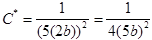 . This expression, in terms of C is . This expression, in terms of C is 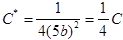 or or . This option states ( . This option states ( ). This is the wrong answer. ). This is the wrong answer. |
|
B) |
This is the correct answer. If the number of buyers doubles, we can then represent the new cost by. This expression, in terms of C isor. |
|
C) |
If the number of buyers doubles, we can then represent the new cost by. This expression, in terms of C isor. This option states ( ). This is the wrong answer. ). This is the wrong answer. |
|
D) |
If the number of buyers doubles, we can then represent the new cost by. This expression, in terms of C isor. This option states ( ). This is the wrong answer. ). This is the wrong answer. |
|
E) |
If the number of buyers doubles, we can then represent the new cost by. This expression, in terms of C isor. This option states ( ). This is the wrong answer. ). This is the wrong answer. |
| . | | | | 4 | | | You have a total of 7 dollars and 25 cents in pocket change consisting of 93 coins in nickels and dimes. How many nickels are there? | | 0 | Opción múltiple | | A | |
A) |
This is the correct answer. Nickels (n) are 5¢ coins, and dimes (d) are 10¢ coins. The total number of cents (725) is distributed in nickels and dimes. . There are 93 coins in total, which expressed in the same terms is . There are 93 coins in total, which expressed in the same terms is . Solving for d in this second equation, we have . Solving for d in this second equation, we have . Substituting this expression for d into the first equation we get . Substituting this expression for d into the first equation we get  . Solving for n we obtain, . Solving for n we obtain,  . The number of nickels is 41. . The number of nickels is 41. |
|
B) |
Nickels (n) are 5¢ coins, and dimes (d) are 10¢ coins. The total number of cents (725) is distributed in nickels and dimes. . There are 93 coins in total, which expressed in the same terms is . There are 93 coins in total, which expressed in the same terms is . Solving for d in this second equation, we have . Solving for d in this second equation, we have . Substituting this expression for d into the first equation we get . Substituting this expression for d into the first equation we get  . Solving for n we obtain, . The number of nickels is 41. This option states 52 as the number of nickels, when the number of dimes is 52. This is the wrong answer. . Solving for n we obtain, . The number of nickels is 41. This option states 52 as the number of nickels, when the number of dimes is 52. This is the wrong answer. |
|
C) |
There are 93 coins in total; therefore, it is not possible to have 205 nickels. This is the wrong answer. |
|
D) |
Nickels (n) are 5¢ coins, and dimes (d) are 10¢ coins. The total number of cents (725) is distributed in nickels and dimes.. There are 93 coins in total, which expressed in the same terms is. Solving for d in this second equation, we have. Substituting this expression for d into the first equation we get . Solving for n we obtain, . The number of nickels is 41. This option has the number of nickels at 15. This answer is wrong. |
|
E) |
Nickels (n) are 5¢ coins, and dimes (d) are 10¢ coins. The total number of cents (725) is distributed in nickels and dimes.. There are 93 coins in total, which expressed in the same terms is. Solving for d in this second equation, we have. Substituting this expression for d into the first equation we get . Solving for n we obtain, . The number of nickels is 41. This answer choice states the number of nickels is 25. This answer is wrong. |
| . | | | | 5 | | | If x5 +y5 =737, the greatest possible value of x is between: | | 0 | Opción múltiple | | C | |
A) |
The greatest value of x5 is when y = 0. In that case and taking the greatest value of the interval 2 we have 25 = 32. So, the greatest value in this option’s range is < 737. This is the wrong answer. |
|
B) |
The greatest value of x5 is when y = 0. In that case and taking the greatest value of the interval 2 we have 35 = 243. So, the greatest value in this option’s range is < 737. This is the wrong answer. |
|
C) |
This is the correct answer. The greatest value of x5 is when y = 0. The lowest value 35 = 243, and the highest 45 = 1024. The greatest value of x could be between 3 and 4. |
|
D) |
The greatest value of x5 is when y = 0. The lowest value in this interval 45 = 1024, which is too big to satisfy the x5 +y5 =737 equality. This is the wrong answer. |
|
E) |
The greatest value of x5 is when y = 0. The lowest value in this interval 115 = 161,051, which is too big to satisfy the x5 +y5 =737 equality. This is the wrong answer. |
| . | | | | 6 | | | For how many integers n is 5n = n4? | | 0 | Opción múltiple | | E | |
A) |
For n<0 we have 5n < 1 and n4 >0, so there is no integer that fits the criteria. For n = 0 we have 5n = 1 and n4 = 0, so there is no integer to fit the criteria either. For n = 1 we have 5 = 1, n = 2 we have 25 = 16, n = 3 then 125 = 81 and so on. The 5n function grows much faster than n4 so there is no integer in which they coincide as n grows. The difference between them grows as n grows. There is no integer for which the equality holds. This answer (five) is wrong. |
|
B) |
For n<0 we have 5n < 1 and n4 >0, so there is no integer that fits the criteria. For n = 0 we have 5n = 1 and n4 = 0, so there is no integer to fit the criteria either. For n = 1 we have 5 = 1, n = 2 we have 25 = 16, n = 3 125 = 81 and so on. The 5n function grows much faster than n4 so there is no integer in which they coincide as n grows. The difference between them grows as n grows. There is no integer for which the equality holds. This answer (four) is wrong. |
|
C) |
For n<0 we have 5n < 1 and n4 >0, so there is no integer that fits the criteria. For n = 0 we have 5n = 1 and n4 = 0, so there is no integer to fit the criteria either. For n = 1 we have 5 = 1, n = 2 we have 25 = 16, n = 3 then 125 = 81 and so on. The 5n function grows much faster than n4 so there is no integer in which they coincide as n grows. The difference between them grows as n grows. There is no integer for which the equality holds. This answer (three) is wrong. |
|
D) |
For n<0 we have 5n < 1 and n4 >0, so there is no integer that fits the criteria. For n = 0 we have 5n = 1 and n4 = 0, so there is no integer to fit the criteria either. For n = 1 we have 5 = 1, n = 2 we have 25 = 16, n = 3 then 125 = 81 and so on. The 5n function grows much faster than n4 so there is no integer in which they coincide as n grows. The difference between them grows as n grows. There is no integer for which the equality holds. This answer (one) is wrong. |
|
E) |
This is the correct answer. For n<0 we have 5n < 1 and n4 >0, so there is no integer that fits the criteria. For n = 0 we have 5n = 1 and n4 = 0, so there is no integer to fit the criteria either. For n = 1 we have 5 = 1, n = 2 we have 25 = 16, n = 3 then 125 = 81 and so on. The 5n function grows much faster than n4 so there is no integer in which they coincide as n grows. The difference between them grows as n grows. There is no integer for which the equality holds. |
| . | | | | 7 | | | In a certain country there are 4 times as many people using operating system Y for their computers as those who use other operating systems. The ratio of those Y system users to the totality of users in this country is: | | 0 | Opción múltiple | | C | |
A) |
If x is the number of people not using Y operating system, then 4x is the number of people who do use it. Also, 4x + x is the total number of users for that country. We thus have the ratio of users to the totality as: 4x / (4x + x) or 4x / 5x, which is a ratio of 4 to 5. Therefore, the answer (1:3) is wrong. |
|
B) |
If x is the number of people not using Y operating system, then 4x is the number of people who do use it. Also, 4x + x is the total number of users for that country. We thus have the ratio of users to the totality as: 4x / (4x + x) or 4x / 5x, which is a ratio of 4 to 5. Therefore, the answer (5:4) is wrong. |
|
C) |
This is the correct answer. If x is the number of people not using Y operating system, then 4x is the number of people who do use it. Also, 4x + x is the total number of users for that country. We thus have the ratio of users to the totality as: 4x / (4x + x) or 4x / 5x, which is a ratio of 4 to 5. |
|
D) |
If x is the number of people not using Y operating system, then 4x is the number of people who do use it. Also, 4x + x is the total number of users for that country. We thus have the ratio of users to the totality as: 4x / (4x + x) or 4x / 5x, which is a ratio of 4 to 5. Therefore, the answer (4:3) is wrong. |
|
E) |
If x is the number of people not using Y operating system, then 4x is the number of people who do use it. Also, 4x + x is the total number of users for that country. We thus have the ratio of users to the totality as: 4x / (4x + x) or 4x / 5x, which is a ratio of 4 to 5. Therefore, the answer (3:4) is wrong. |
| . | | | | 8 | | | A software outsourcing company pays its 200 employees $8 dollars per hour for up to 40hr. per week. If the programmer works beyond that amount of hours, the company pays 50% more per hour of extra work. What is the total amount the company needs to reserve for its payroll, if the distribution of the hours worked per employee is as follows: 15% of the programmers worked 22hours, 5% 30hours, 40% the full 40hours, and the remaining employees worked a 50hour-week. | | 0 | Opción múltiple | | C | |
A) |
In terms of the total employee population: 200(.15)(22)+200(.05)(30)+200(.4)(40)+200(.4)(50)+200(.4)(5) is the total amount of money the company needs to set aside for its payroll. The last two terms of the addition being the total number of employees (200) times the forty percent remaining employees (.4) times the number of hours (50). The last term includes half the number of hours above 40 to take into account the 50% overpay. This equation yields 8,560 hours to be paid at $8. The resulting amount due is $68,480. This answer ($8,200) is wrong. |
|
B) |
In terms of the total employee population:
200(.15)(22)+200(.05)(30)+200(.4)(40)+200(.4)(50)+200(.4)(5) is the total amount of money the company needs to set aside for its payroll. The last two terms of the addition being the total number of employees (200) times the forty percent remaining employees (.4) times the number of hours (50). The last term includes half the number of hours above 40 to take into account the 50% overpay. This equation yields 8,560 hours to be paid at $8. The resulting amount due is $68,480. This answer ($8,560) is wrong |
|
C) |
This is the correct answer. In terms of the total employee population:
200(.15)(22)+200(.05)(30)+200(.4)(40)+200(.4)(50)+200(.4)(5) is the total amount of money the company needs to set aside for its payroll. The last two terms of the addition being the total number of employees (200) times the forty percent remaining employees (.4) times the number of hours (50). The last term includes half the number of hours above 40 to take into account the 50% overpay. This equation yields 8,560 hours to be paid at $8. The resulting amount due is $68,480. |
|
D) |
In terms of the total employee population:
200(.15)(22)+200(.05)(30)+200(.4)(40)+200(.4)(50)+200(.4)(5) is the total amount of money the company needs to set aside for its payroll. The last two terms of the addition being the total number of employees (200) times the forty percent remaining employees (.4) times the number of hours (50). The last term includes half the number of hours above 40 to take into account the 50% overpay. This equation yields 8,560 hours to be paid at $8. The resulting amount due is $68,480.This answer ($82,600) is wrong. |
|
E) |
In terms of the total employee population:
200(.15)(22)+200(.05)(30)+200(.4)(40)+200(.4)(50)+200(.4)(5) is the total amount of money the company needs to set aside for its payroll. The last two terms of the addition being the total number of employees (200) times the forty percent remaining employees (.4) times the number of hours (50). The last term includes half the number of hours above 40 to take into account the 50% overpay. This equation yields 8,560 hours to be paid at $8. The resulting amount due is $68,480. This answer ($86,860) is wrong. |
| . | | | | 9 | | | At a certain university biology class, the ratio of students who are majoring in medicine to the ones who are not doing so is 2 to 7. If three more students majoring in medicine were to join the class the ratio would now be 1 to 3. How many students are in the class? | | 0 | Opción múltiple | | E | |
A) |
If the ratio of medical to non-medical students is represented as m/n, we have and similarly for the second situation and similarly for the second situation  , which gives , which gives from the first and from the first and from the second equation. Combining these equations and solving for n we have n = 63. To get the number of medical students we use, to obtain m = 18. Therefore, the total number of students in the class is from the second equation. Combining these equations and solving for n we have n = 63. To get the number of medical students we use, to obtain m = 18. Therefore, the total number of students in the class is This option (63) is the wrong answer. This option (63) is the wrong answer. |
|
B) |
If the ratio of medical to non-medical students is represented as m/n, we have and similarly for the second situation, which gives from the first and from the second equation. Combining these equations and solving for n we have n = 63. To get the number of medical students we use, to obtain m = 18. Therefore, the total number of students in the class is This option (18) is the wrong answer. |
|
C) |
If the ratio of medical to non-medical students is represented as m/n, we have and similarly for the second situation, which gives from the first and from the second equation. Combining these equations and solving for n we have n = 63. To get the number of medical students we use, to obtain m = 18. Therefore, the total number of students in the class is This option (93) is the wrong answer. |
|
D) |
If the ratio of medical to non-medical students is represented as m/n, we have and similarly for the second situation, which gives from the first and from the second equation. Combining these equations and solving for n we have n = 63. To get the number of medical students we use, to obtain m = 18. Therefore, the total number of students in the class is This option (42) is the wrong answer. |
|
E) |
This is the correct answer. If the ratio of medical to non-medical students is represented as m/n, we have and similarly for the second situation, which gives from the first and from the second equation. Combining these equations and solving for n we have n = 63. To get the number of medical students we use, to obtain m = 18. Therefore, the total number of students in the class is |
| . | | | | 10 | | | If ((491)(3/5))n = 4912, what is the value of n? | | 0 | Opción múltiple | | D | | . | | | | 11 | | | If x is the sum of all the odd integers from 70 to 110 inclusive, and y is the number of odd integers from 70 to 110, inclusive, what is the value of x + 3y?
| | 0 | Opción múltiple | | D | |
A) |
Because the numbers from 70 to 110 are an ordered sequence, their sum is the average times the number of numbers to be added. This average is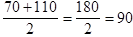 , and the number of odd numbers in , and the number of odd numbers in
the interval is 20(the value of y), so the sum of all the odd integers is (90)(20) = 1800. Substituting x + 3y = 1800 + 3(20) = 1860. This option (1780) is the wrong answer. |
|
B) |
Because the numbers from 70 to 110 are an ordered sequence, their sum is the average times the number of numbers to be added. This average is, and the number of odd numbers in
the interval is 20(the value of y), so the sum of all the odd integers is (90)(20) = 1800. Substituting x + 3y = 1800 + 3(20) = 1860. This option (1800) is the wrong answer. |
|
C) |
Because the numbers from 70 to 110 are an ordered sequence, their sum is the average times the number of numbers to be added. This average is, and the number of odd numbers in
the interval is 20(the value of y), so the sum of all the odd integers is (90)(20) = 1800. Substituting x + 3y = 1800 + 3(20) = 1860. Then x + 3y = 1800 + 3(20) = 1860. This option (1820) is the wrong answer. |
|
D) |
This is the correct answer. Because the numbers from 70 to 110 are an ordered sequence, their sum is the average times the number of numbers to be added. This average is, and the
number of odd numbers in the interval is 20(the value of y), so the sum of all the odd integers is (90)(20) = 1800. Substituting x + 3y = 1800 + 3(20) = 1860. |
|
E) |
Because the numbers from 70 to 110 are an ordered sequence, their sum is the average times the number of numbers to be added. This average is, and the number of odd numbers in
the interval is 20(the value of y), so the sum of all the odd integers is (90)(20) = 1800. Substituting x + 3y = 1800 + 3(20) = 1860. This option (1880) is the wrong answer. |
| . | | | | 12 | | | If x is to be chosen at random from the prime numbers less than 20, and y is to be chosen from the set { 4, 6, 8, 32, 147 }, what is the probability that xy will be even?
| | 0 | Opción múltiple | |
A) |

|
;# |
B) |

|
;# |
C) |

|
;# |
D) |

|
;# |
E) |

|
| D | |
A) |
The set of prime numbers < 20 from which x could be chosen is {2, 3, 5, 7, 11, 13, 17, 19}, and for y we have { 4, 6, 8, 32, 147 }. For the xy multiplication to be even we need either x or y to be even. We then have 5 pairs starting with the number 2 and 4 pairs where x is odd and multiplied by an even number in y. The total number of pairs resulting in even numbers is then 5+4(7) = 33. The total number of pairs is 8(5) = 40. Therefore, the probability of obtaining an even number when multiplying xy is. This answer () is wrong. |
|
B) |
The set of prime numbers < 20 from which x could be chosen is {2, 3, 5, 7, 11, 13, 17, 19}, and for y we have { 4, 6, 8, 32, 147 }. For the xy multiplication to be even we need either x or y to be even. We then have 5 pairs starting with the number 2 and 4 pairs where x is odd and multiplied by an even number in y. The total number of pairs resulting in even numbers is then 5+4(7) = 33. The total number of pairs is 8(5) = 40. Therefore, the probability of obtaining an even number when multiplying xy is. This answer () is wrong. |
|
C) |
The set of prime numbers < 20 from which x could be chosen is {2, 3, 5, 7, 11, 13, 17, 19}, and for y we have { 4, 6, 8, 32, 147 }. For the xy multiplication to be even we need either x or y to be even. We then have 5 pairs starting with the number 2 and 4 pairs where x is odd and multiplied by an even number in y. The total number of pairs resulting in even numbers is then 5+4(7) = 33. The total number of pairs is 8(5) = 40. Therefore, the probability of obtaining an even number when multiplying xy is. This answer () is wrong. |
|
D) |
The set of prime numbers < 20 from which x could be chosen is {2, 3, 5, 7, 11, 13, 17, 19}, and for y we have { 4, 6, 8, 32, 147 }. For the xy multiplication to be even we need either x or y to be even. We then have 5 pairs starting with the number 2 and 4 pairs where x is odd and multiplied by an even number in y. The total number of pairs resulting in even numbers is then 5+4(7) = 33. The total number of pairs is 8(5) = 40. Therefore, the probability of obtaining an even number when multiplying xy is. |
|
E) |
The set of prime numbers < 20 from which x could be chosen is {2, 3, 5, 7, 11, 13, 17, 19}, and for y we have { 4, 6, 8, 32, 147 }. For the xy multiplication to be even we need either x or y to be even. We then have 5 pairs starting with the number 2 and 4 pairs where x is odd and multiplied by an even number in y. The total number of pairs resulting in even numbers is then 5+4(7) = 33. The total number of pairs is 8(5) = 40. Therefore, the probability of obtaining an even number when multiplying xy is. This answer () is wrong. |
| . | | | | 13 | | | What percentage is the following fraction equivalent to? (4.0080808 / 5.0101010)
| | 0 | Opción múltiple | | C | |
A) |
The numerator 4.0080808 is 4(1.0020202) and the denominator is 5(1.0020202) so the simplified fraction is = 80%. This answer (76%) is the wrong answer. = 80%. This answer (76%) is the wrong answer. |
|
B) |
The numerator 4.0080808 is 4(1.0020202) and the denominator is The numerator 4.0080808 is 4(1.0020202) and the denominator is 5(1.0020202) so the simplified fraction is = 80%. This answer (78%) is the wrong answer. |
|
C) |
This is the correct answer. The numerator 4.0080808 is 4(1.0020202) and the denominator is 5(1.0020202) so the simplified fraction is = 80%. |
|
D) |
The numerator 4.0080808 is 4(1.0020202) and the denominator is 5(1.0020202) so the simplified fraction is = 80%. This answer (81.2%) is the wrong answer. |
|
E) |
The numerator 4.0080808 is 4(1.0020202) and the denominator is 5(1.0020202) so the simplified fraction is = 80%. This answer (83.005%) is the wrong answer. |
| . | | | | 14 | | | Five students working individually can solve 46 problems per hour. Assuming they work at the same rate, approximately how many problems could 13 students solve in 20 minutes?
| | 0 | Opción múltiple | | D | |
A) |
If five students produce 46 problems per hour, 10 students solve  problems in the same amount of time. One student then solves problems in the same amount of time. One student then solves problems per hour. 13 students then solve problems per hour. 13 students then solve  or or
alternatively  problems per hour. In 20 minutes, which is equal to problems per hour. In 20 minutes, which is equal to  of an hour, 13 students solve of an hour, 13 students solve
problems. This answer (46) is the wrong answer. |
|
B) |
If five students produce 46 problems per hour, 10 students solve problems in the same amount of time. One student then solves problems per hour. 13 students then solve or
alternatively problems per hour. In 20 minutes, which is equal to of an hour, 13 students solve
problems. This answer (44) is the wrong answer.
|
|
C) |
If five students produce 46 problems per hour, 10 students solve problems in the same amount of time. One student then solves problems per hour. 13 students then solve or
alternatively problems per hour. In 20 minutes, which is equal to of an hour, 13 students solve
problems. This answer (42) is the wrong answer. |
|
D) |
This is the correct answer. If five students produce 46 problems per hour, 10 students solve problems in the same amount of time. One student then solves problems per hour. 13
students then solve or alternatively problems per hour. In 20 minutes, which is equal to of an hour, 13 students solve problems. |
|
E) |
If five students produce 46 problems per hour, 10 students solve problems in the same amount of time. One student then solves problems per hour. 13 students then solve or
alternatively problems per hour. In 20 minutes, which is equal to of an hour, 13 students solve problems. This answer (38) is the wrong answer. |
| . | | | | 15 | | | If Jennifer is taller than Sandy, Mabel taller than Wendy, Tammy taller than Sandy, and Sandy is taller than Mabel, which of the following statements about the girls’ heights must be true?
I Jennifer is taller than Tammy.
II Tammy is taller than Wendy.
III Jennifer is taller than Mabel.
| | 0 | Opción múltiple | | E | |
A) |
If we order the girls from shortest to tallest we have Wendy, Mabel, and Sandy. From the problem statement, we know that Jennifer is taller than Sandy, and that Tammy is taller than Sandy. Therefore, statement II ‘Tammy is taller than Wendy’ is necessarily true because Tammy is taller than Sandy, Sandy taller than Mabel, and Mabel taller than Wendy. Through similar reasoning, we find that statement III ‘Jennifer is taller than Mabel’ is also true. This is because Jennifer is taller than Sandy and Sandy taller than Mabel. Number I is not necessarily true. This answer is wrong. |
|
B) |
If we order the girls from shortest to tallest we have Wendy, Mabel, and Sandy. From the problem statement, we know that Jennifer is taller than Sandy, and that Tammy is taller than Sandy. Therefore, statement II ‘Tammy is taller than Wendy’ is necessarily true because Tammy is taller than Sandy, Sandy taller than Mabel, and Mabel taller than Wendy. Through similar reasoning, we find that statement III ‘Jennifer is taller than Mabel’ is also true. This is because Jennifer is taller than Sandy and Sandy taller than Mabel. This option, stating ‘only II is necessarily true’ is wrong. |
|
C) |
If we order the girls from shortest to tallest we have Wendy, Mabel, and Sandy. From the problem statement, we know that Jennifer is taller than Sandy, and that Tammy is taller than Sandy. Therefore, statement II ‘Tammy is taller than Wendy’ is necessarily true because Tammy is taller than Sandy, Sandy taller than Mabel, and Mabel taller than Wendy. Through similar reasoning, we find that statement III ‘Jennifer is taller than Mabel’ is also true. This is because Jennifer is taller than Sandy and Sandy taller than Mabel. This option stating ‘only III is necessarily true’ is wrong. |
|
D) |
If we order the girls from shortest to tallest we have Wendy, Mabel, and Sandy. From the problem statement, we know that Jennifer is taller than Sandy, and that Tammy is taller than Sandy. Therefore, statement II ‘Tammy is taller than Wendy’ is necessarily true because Tammy is taller than Sandy, Sandy taller than Mabel, and Mabel taller than Wendy. Through similar reasoning, we find that statement III ‘Jennifer is taller than Mabel’ is also true. This is because Jennifer is taller than Sandy and Sandy taller than Mabel. Number I is not necessarily true. This answer stating ‘I and II are necessarily true’ is wrong. |
|
E) |
This is the correct answer. If we order the girls from shortest to tallest we have Wendy, Mabel, and Sandy. From the problem statement, we know that Jennifer is taller than Sandy, and that Tammy is taller than Sandy. Therefore, statement II ‘Tammy is taller than Wendy’ is necessarily true because Tammy is taller than Sandy, Sandy taller than Mabel, and Mabel taller than Wendy. Through similar reasoning, we find that statement III ‘Jennifer is taller than Mabel’ is also true. This is because Jennifer is taller than Sandy and Sandy taller than Mabel. |
| . | | | | 16 | | | A student who averages 4 of his 5 grades obtains 87.25. What is the lowest grade he can get on the fifth grade to obtain at least an 89 as an average?
| | 0 | Opción múltiple | | D | |
A) |
To obtain the average of five grades, and forcing the average to be 89 we have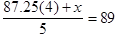 , where , where is the unknown grade. Solving is the unknown grade. Solving
for we get  or equivalently or equivalently  . Thus, the minimum grade the student could get for an average of 89 is 96. This answer (89) is wrong. . Thus, the minimum grade the student could get for an average of 89 is 96. This answer (89) is wrong. |
|
B) |
To obtain the average of five grades, and forcing the average to be 89 we have, where is the unknown grade. Solvin
g for we get or equivalently . Thus, the minimum grade the student could get for an average of 89 is 96. This answer (90) is wrong. |
|
C) |
To obtain the average of five grades, and forcing the average to be 89 we have, where is the unknown grade. Solving
for we get or equivalently . Thus, the minimum grade the student could get for an average of 89 is 96. This answer (93) is wrong. |
|
D) |
This is the correct answer. To obtain the average of five grades, and forcing the average to be 89 we have, where
is the unknown grade. Solving for we get or equivalently . Thus, the minimum grade the student could get for an average of 89 is 96. |
|
E) |
To obtain the average of five grades, and forcing the average to be 89 we have, where is the unknown grade. Solving
for we get or equivalently . Thus, the minimum grade the student could get for an average of 89 is 96. Thus, the minimum grade the student could get for an average of 89 is 96. This answer (99) is not the correct answer. |
| . | | | | 17 | | | I paid 50 dollars for a certain book at a store that is normally priced at 96% of its Suggested Retail Price (SRP). There is a special mark down of 10% on that same book. The whole store is undergoing a 30% off sale including previous markdowns. Approximately how much money did I save compared to buying the article at its SRP?
| | 0 | Opción múltiple | | C | |
A) |
The SRP is the original amount we need to compare to 50 dollars. If X is the SRP then X(.96) is the store price. X(.96)(.9) is the price after the 10% discount, and X(.96)(.9)(.6) is the price after all the discounts. The price paid: 50 = X(.96)(.9)(.6) which solving for X gives X = 96.45. Subtracting the price paid from the SRP we get the total savings. 96.45 – 50 = 46.45. This answer (28 dollars) is wrong. |
|
B) |
The SRP is the original amount we need to compare to 50 dollars. If X is the SRP then X(.96) is the store price. X(.96)(.9) is the price after the 10% discount, and X(.96)(.9)(.6) is the price after all the discounts. The price paid: 50 = X(.96)(.9)(.6) which solving for X gives X = 96.45. Subtracting the price paid from the SRP we get the total savings. 96.45 – 50 = 46.45. This answer (35 dollars) is wrong. |
|
C) |
This is the correct answer. The SRP is the original amount we need to compare to 50 dollars. If X is the SRP then X(.96) is the store price. X(.96)(.9) is the price after the 10% discount, and X(.96)(.9)(.6) is the price after all the discounts. The price paid: 50 = X(.96)(.9)(.6) which solving for X gives X = 96.45. Subtracting the price paid from the SRP we get the total savings. 96.45 – 50 = 46.45. |
|
D) |
The SRP is the original amount we need to compare to 50 dollars. If X is the SRP then X(.96) is the store price. X(.96)(.9) is the price after the 10% discount, and X(.96)(.9)(.6) is the price after all the discounts. The price paid: 50 = X(.96)(.9)(.6) which solving for X gives X = 96.45. Subtracting the price paid from the SRP we get the total savings. 96.45 – 50 = 46.45.This answer (68 dollars) is wrong. |
|
E) |
The SRP is the original amount we need to compare to 50 dollars. If X is the SRP then X(.96) is the store price. X(.96)(.9) is the price after the 10% discount, and X(.96)(.9)(.6) is the price after all the discounts. The price paid: 50 = X(.96)(.9)(.6) which solving for X gives X = 96.45. Subtracting the price paid from the SRP we get the total savings. 96.45 – 50 = 46.45.This answer (96 dollars) is wrong. |
| . | | | | 18 | | | You need a combination of a sequence of 4 digits in which at least one is repeated, to open a certain safe. Find the number of possible number sequences that could open the safe.
| | 0 | Opción múltiple | | A |
|
A) |
This answer is correct. The number of numbers where none of the digits repeat is  , which equals 5040. This is not what we are looking for. The number of numbers to be formed by four digits is 104. Since at least one of the digits is repeated, we subtract the number of sequences in which there is no repetition. The number of sequences in which at least 1 number is repeated is: , which equals 5040. This is not what we are looking for. The number of numbers to be formed by four digits is 104. Since at least one of the digits is repeated, we subtract the number of sequences in which there is no repetition. The number of sequences in which at least 1 number is repeated is: . . |
|
B)
|
The number of numbers where none of the digits repeat is , which equals 5040. This is not what we are looking for. The number of numbers to be formed by four digits is 104. Since at least one of the digits is repeated, we subtract the number of sequences in which there is no repetition. The number of sequences in which at least 1 number is repeated is: . This answer (5040) is wrong. . This answer (5040) is wrong. |
|
C) |
The total number of sequences we can form using four digits is 104. This includes sequences, which do not repeat numbers and those that do. This answer (10000) is therefore wrong. |
|
D) |
The number of numbers where none of the digits repeat is , which equals 5040. This is not what we are looking for. The number of numbers to be formed by four digits is 104. Since at least one of the digits is repeated, we subtract the number of sequences in which there is no repetition. The number of sequences in which at least 1 number is repeated is:. This answer (90000) is wrong. |
|
E) |
The number of numbers where none of the digits repeat is , which equals 5040. This is not what we are looking for. The number of numbers to be formed by four digits is 104. Since at least one of the digits is repeated, we subtract the number of sequences in which there is no repetition. The number of sequences in which at least 1 number is repeated is: 104  . This answer (900) is wrong. . This answer (900) is wrong. |
| . | | | | 19 | | | Which of these numbers is the greatest?
| | 0 | Opción múltiple | | A | |
A) |
This is the correct answer. In negative numbers, the number closest to zero is the greatest. In the options given, or -0.0000025 is the closest to zero. or -0.0000025 is the closest to zero. |
|
B) |
In negative numbers, the number closest to zero is the greatest. In the options given, or -0.0000025 is the closest to zero. This answer is equivalent to -0.000857… and is the wrong answer. is equivalent to -0.000857… and is the wrong answer. |
|
C) |
In negative numbers, the number closest to zero is the greatest. In the options given,or -0.0000025 is the closest to zero. This answer, , ,  or -0.3, is the wrong answer. or -0.3, is the wrong answer. |
|
D) |
In negative numbers, the number closest to zero is the greatest. In the options given,or -0.0000025 is the closest to zero. This answer (-3) is wrong. |
|
E) |
In negative numbers, the number closest to zero is the greatest. In the options given,or -0.0000025 is the closest to zero. This
answer (-356) is wrong. |
| . | | | | 20 | | | Find the value of x and of y which are the roots of this set of equations: 3x-2y=27 and -9x+6y=-81.
| | 0 | Opción múltiple | | E |
|
A) |
To be able to determine the roots of a set of simultaneous equations, these equations must be independent. The given equations are not independent. The second equation is the first equation times (-3). In other words,  , the first term of the second equation. , the first term of the second equation.  , the second term, and , the second term, and  the last. These equations are therefore dependent, and it is not possible to find a singular value for and another for the last. These equations are therefore dependent, and it is not possible to find a singular value for and another for such that the equations hold. This answer is wrong. such that the equations hold. This answer is wrong. |
|
B) |
To be able to determine the roots of a set of simultaneous equations, these equations must be independent. The given equations are not independent. The second equation is the first equation times (-3). In other words, , the first term of the second equation. , the second term, and the last. These equations are therefore dependent, and it is not possible to find a singular value for and another for such that the equations hold. This answer is wrong. |
|
C) |
To be able to determine the roots of a set of simultaneous equations, these equations must be independent. The given equations are not independent. The second equation is the first equation times (-3). In other words, , the first term of the second equation. , the second term, and the last. These equations are therefore dependent, and it is not possible to find a singular value for and another for such that the equations hold. This answer is wrong. |
|
D) |
To be able to determine the roots of a set of simultaneous equations, these equations must be independent. The given equations are not independent. The second equation is the first equation times (-3). In other words, , the first term of the second equation. , the second term, and the last. These equations are therefore dependent, and it is not possible to find a singular value for and another for such that the equations hold. This answer is wrong. |
|
E) |
This is the correct answer. To be able to determine the roots of a set of simultaneous equations, these equations must be independent. The given equations are not independent. The second equation is the first equation times (-3). In other words, , the first term of the second equation. , the second term, and the last. These equations are therefore dependent, and it is not possible to find a singular value for and another for such that the equations hold. |
| . | | | | 21 | | | Which of these fractions is equivalent to 
| | 0 | Opción múltiple | |
A) |

|
;# |
B) |

|
;# |
C) |

|
;# |
D) |

|
;# |
E) |

|
| C | A) |
Reducing the last fraction in the denominator, we obtain  . We then have . We then have  . Following similar reasoning, we have . Following similar reasoning, we have  . Finally the last part of the fraction gives . Finally the last part of the fraction gives  . This answer ( . This answer ( ) is the wrong answer. ) is the wrong answer.
|
B) |
Reducing the last fraction in the denominator, we obtain . We then have . Following similar reasoning, we have . Finally the last part of the fraction gives . This answer ( ) is the wrong answer. ) is the wrong answer.
|
C) |
This is the correct answer. Reducing the last fraction in the denominator, we obtain . We then have  . Following similar reasoning, we have . Finally the last part of the fraction gives . . Following similar reasoning, we have . Finally the last part of the fraction gives .
|
D) |
Reducing the last fraction in the denominator, we obtain . We then have . Following similar reasoning, we have . Finally the last part of the fraction gives . This answer ( ) is the wrong answer. ) is the wrong answer.
|
E) |
Reducing the last fraction in the denominator, we obtain . We then have . Following similar reasoning, we have . Finally the last part of the fraction gives . This answer ( ) is the wrong answer. ) is the wrong answer.
|
| . | | | | 22 | | | What is the result of 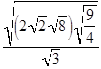 ?
| | 0 | Opción múltiple | | A |
|
A) |
This is the correct answer. Simplifying the numerator, we get and and . .
Substituting this result into the original expression results in  . . |
|
B) |
Simplifying the numerator, we get and.
Substituting this result into the original expression results in . This
answer ( ) is the wrong answer. ) is the wrong answer. |
|
C) |
Simplifying the numerator, we get and.
Substituting this result into the original expression results in . This answer ( ) is the wrong answer. ) is the wrong answer. |
|
D) |
Simplifying the numerator, we get and. and.
Substituting this result into the original expression results in  . This . This
answer ( ) is the wrong answer. ) is the wrong answer. |
|
E) |
Simplifying the numerator, we get, and.
Substituting this result into the original expression, results in . This
answer (8) is the wrong answer. |
| . | | | | 23 | | | A certain biker on a new speed bike averages 20miles per hour (mph) on the Ajusco-Cuernavaca part of the circuit. The biker returns along the same route from Cuernavaca to Ajusco averaging 5 mph. Which of the following answers best approximates the average speed for the complete circuit?
| | 0 | Opción múltiple | |
A) |
 mph mph
|
;#
;#
;# |
D) |
 mph mph
|
;# | E | |
A) |
Speed relates to distance and time through the equation: . The time the biker took to travel the first half of the journey is . The time the biker took to travel the first half of the journey is  . The time taken to complete the circuit is . The time taken to complete the circuit is . .
The expression for the average speed in the complete circuit is  mph. This answer mph. This answer
(mph) is wrong. |
|
B) |
Speed relates to distance and time through the equation:. The time the biker took to travel the first half of the journey is. The time taken to complete the circuit is. The
expression for the average speed in the complete circuit ismph. This answer
(25mph) is wrong. |
|
C) |
Speed relates to distance and time through the equation:. The time the biker took to travel the first half of the journey is. The time taken to complete the circuit is. The
expression for the average speed in the complete circuit is mph. This answer mph. This answer
(13mph) is wrong. |
|
D) |
Speed relates to distance and time through the equation:. The time the biker took to travel the first half of the journey is. The time taken to complete the circuit is. The expression for the average speed in the complete circuit ismph. This answer
( mph) is wrong. |
|
E) |
This is the correct answer. Speed relates to distance and time through the equation:. The time the biker took to travel the first half of the journey is. The time taken to complete the circuit is. The expression for the average speed in the complete circuit is  mph. mph. |
| . | | | | 24 | | | The number of visitors to a very popular website doubles every 15 minutes. Starting at 20,000 visitors and assuming this rate of growth to be constant, approximately how much time will it take for the website to reach 20 billion visitors?
| | 0 | Opción múltiple |
;#
;# |
C) |
 years years
|
;# |
D) |
 years years
|
;# |
E) |
 years years
|
| C | | . | | | | 25 | | | A student at college B takes 5 minutes to type words. Which expression represents the time that this student takes to type words? | | 0 | Opción múltiple | |
A) |

|
;# |
B) |

|
;#
|
C) |

|
;# |
D) |

|
;# |
E) |

|
| E | | . | | | | 26 | | Question 26 of 50
Instructions: This section tests your ability to answer Data Sufficiency questions in the Quantitative part of the GMAT. You are given a problem statement and some information relating to the context in which the question is set. You are to select the option that best describes the sufficiency of the information provided for answering the question. It is not necessary that you know the answer to the question, what is necessary is that you know whether the information provided by either the problem statement, or the two additional statements is sufficient to answer the question. You should consider the numbers used in these problems to be real numbers, unless otherwise stated. All geometrical figures, i.e. triangles, in this lab should be considered to lie in a plane. You should take no more than 2 minutes per question. | If  is a positive integer, is is a positive integer, is  odd? odd?
(1) y is odd
(2) x+2 is even | | 0 | Opción múltiple | |
A) |
Statement (1) alone is sufficient, but statement (2) alone is not sufficient. |
;# |
B) |
Statement (2) alone is sufficient, but statement (1) alone is not sufficient. |
;# |
C) |
BOTH statements TOGETHER are sufficient, but NEITHER statement ALONE is sufficient. |
;# |
D) |
EACH statement ALONE is sufficient. |
;# |
E) |
Statements (1) and (2) TOGETHER are NOT sufficient. |
| E | | | | | | 27 | | | | | 0 | Opción múltiple |
|
A) |
Statement (1) alone is sufficient, but statement (2) alone is not sufficient. |
;#
|
B) |
Statement (2) alone is sufficient, but statement (1) alone is not sufficient. |
;# |
C) |
BOTH statements TOGETHER are sufficient, but NEITHER statement ALONE is sufficient. |
;#
|
D) |
EACH statement ALONE is sufficient. |
;#
|
E) |
Statements (1) and (2) TOGETHER are NOT sufficient. |
| C |
|
A) |
If , then the equation would read , then the equation would read  or or  . We do not know the value of . We do not know the value of , so we do not know if the equality holds. Option A) is incorrect. , so we do not know if the equality holds. Option A) is incorrect. |
|
B) |
If  the original equation reads the original equation reads  or or  . We do not know the value of . We do not know the value of , so we cannot know whether the equality holds or not. Option B) is incorrect. , so we cannot know whether the equality holds or not. Option B) is incorrect. |
|
C) |
This is the correct option. If , then the equation would read or . If , then  , , or or  . We can answer the question using both statements (1) and (2). . We can answer the question using both statements (1) and (2). |
|
D) |
If , then the equation would read or . We do not know the value of , so we do not know if the equality holds. Option D) is incorrect. |
|
E) |
If , then the equation would read or . If , then  or . We can answer the question using both statements (1) and (2). Option E) is incorrect. or . We can answer the question using both statements (1) and (2). Option E) is incorrect. |
| | | | | 28 | | |
How much did a student pay for a philosophy book at a university bookstore?
(1) The book’s suggested retail value (SRP) is $90, and there is a student discount of 15% applicable on purchases of over $100.
(2) The student bought 2 other books at that same time. The cost of the cheapest book was $4. |
| | 0 | Opción múltiple | |
A) |
Statement (1) alone is sufficient, but statement (2) alone is not sufficient. |
;# |
B) |
Statement (2) alone is sufficient, but statement (1) alone is not sufficient. |
;# |
C) |
BOTH statements TOGETHER are sufficient, but NEITHER statement ALONE is sufficient. |
;# |
D) |
EACH statement ALONE is sufficient. |
;# |
E) |
Statements (1) and (2) TOGETHER are NOT sufficient. |
| E | |
A) |
Only having the SRP and the possible discount is not enough to determine the final price paid for the philosophy book. We do not know how much the student paid for the philosophy book using statement (1) alone. Option A) is incorrect. |
|
B) |
Statement (2) alone is not sufficient to determine the final price paid for the philosophy book. Option B) is incorrect. |
|
C) |
Taking both statements (1) and (2) together we know: the book’s SRP, the possible discount, and that the price of the cheaper of the other two books bought was $4. The total purchase price is >$98. We cannot determine if the total purchase went above $100 without knowing the price of the third book. Option C) is incorrect. |
|
D) |
Only having the SRP and the possible discount is not enough to determine the final price paid for the philosophy book. We do not know how much the student paid for the philosophy book using statement (1) alone. Option D) is incorrect. |
|
E) |
This is the correct option. Taking both statements (1) and (2) together we know the book’s SRP, the possible discount, and that the price of the cheaper of the other two books bought was $4. The total purchase price is >$98. We cannot determine whether the total purchase price went above $100 without knowing the price of the third book. |
| | | | | 29 | | | | | 0 | Opción múltiple | |
A) |
Statement (1) alone is sufficient, but statement (2) alone is not sufficient. |
;# |
B) |
Statement (2) alone is sufficient, but statement (1) alone is not sufficient. |
;# |
C) |
BOTH statements TOGETHER are sufficient, but NEITHER statement ALONE is sufficient. |
;# |
D) |
EACH statement ALONE is sufficient. |
;# |
E) |
Statements (1) and (2) TOGETHER are NOT sufficient. |
| B | |
A) |
Statement (1), , does not provide sufficient information on whether , does not provide sufficient information on whether  is a right triangle. The equation is a right triangle. The equation only holds for right angle triangles. Option A) is incorrect. only holds for right angle triangles. Option A) is incorrect. |
|
B) |
This is the correct option. Statement (2), , provides sufficient information. If statement (2) is true, is a right triangle. The information provided by statement (2) also states that , provides sufficient information. If statement (2) is true, is a right triangle. The information provided by statement (2) also states that  is the hypotenuse of the triangle, so the equation holds. is the hypotenuse of the triangle, so the equation holds. |
|
C) |
Statement (2),, provides sufficient information. If statement (2) is true, is a right triangle. The information provided by statement (2) also states that is the hypotenuse of the triangle, so the equation holds. Option C) is incorrect. |
|
D) |
Statement (1),, does not provide sufficient information on whether is a right angle triangle. The equation only holds for right triangles. Because statement (1) is not sufficient, the statement that either statement alone is sufficient is wrong. Option D) is incorrect. |
|
E) |
Statement (2),, provides sufficient information. If statement (2) is true, is a right triangle. The information provided by statement (2) also states that is the hypotenuse of the triangle, so the equation holds. The statement that neither statement can answer the question is incorrect because, statement 2 alone could answer the question. Option E) is incorrect. |
| | | | | 30 | | |
A four digit number can be represented as  , where each letter stands for a digit. Is number divisible by three? , where each letter stands for a digit. Is number divisible by three?
(1)
(2) is divisible by 3 is divisible by 3 |
| | 0 | Opción múltiple | |
A) |
Statement (1) alone is sufficient, but statement (2) alone is not sufficient. |
;# |
B) |
Statement (2) alone is sufficient, but statement (1) alone is not sufficient. |
;# |
C) |
BOTH statements TOGETHER are sufficient, but NEITHER statement ALONE is sufficient. |
;# |
D) |
EACH statement ALONE is sufficient. |
;# |
E) |
Statements (1) and (2) TOGETHER are NOT sufficient. |
| A | |
A) |
This is the correct option. For a number to be divisible by 3 the sum of its digits must be divisible by three. Statement (1) provides information about the sum of the digits in. This is sufficient information to answer the question. |
|
B) |
Statement (2) provides information about and and , but there is no information about or , but there is no information about or  . Therefore, only using statement (2) we cannot answer the question. Option B) is incorrect. . Therefore, only using statement (2) we cannot answer the question. Option B) is incorrect. |
|
C) |
For a number to be divisible by 3 the sum of its digits must be divisible by three. Statement 1 provides information about the sum of the digits in. This is sufficient information to answer the question. It is not necessary to consider both statements together. Option C) is incorrect. |
|
D) |
Statement (2) provides information about and, but there is no information about or. Therefore, using statement (2) alone there is insufficient information to answer the question. Stating that either statement alone is sufficient is wrong because of this. Option D) is incorrect. |
|
E) |
For a number to be divisible by 3 the sum of its digits must be divisible by three. Statement (1) provides information about the sum of the digits in. This is sufficient information to answer the question. Therefore, stating that it is not possible to answer the question with the given statements is wrong. Option E) is incorrect. |
| | |
|
Ver en el explorador web /_layouts/VisioWebAccess/VisioWebAccess.aspx?listguid={ListId}&itemid={ItemId}&DefaultItemOpen=1 0x0 0x1 FileType vdw 255 Detalles de cumplimiento javascript:commonShowModalDialog('{SiteUrl}/_layouts/itemexpiration.aspx?ID={ItemId}&List={ListId}', 'center:1;dialogHeight:500px;dialogWidth:500px;resizable:yes;status:no;location:no;menubar:no;help:no', function GotoPageAfterClose(pageid){if(pageid == 'hold') {STSNavigate(unescape(decodeURI('{SiteUrl}'))+'/_layouts/hold.aspx?ID={ItemId}&List={ListId}'); return false;} if(pageid == 'audit') {STSNavigate(unescape(decodeURI('{SiteUrl}'))+'/_layouts/Reporting.aspx?Category=Auditing&backtype=item&ID={ItemId}&List={ListId}'); return false;} if(pageid == 'config') {STSNavigate(unescape(decodeURI('{SiteUrl}'))+'/_layouts/expirationconfig.aspx?ID={ItemId}&List={ListId}'); return false;}}, null); return false; 0x0 0x1 ContentType 0x01 898 Editar en explorador /_layouts/images/icxddoc.gif /_layouts/formserver.aspx?XsnLocation={ItemUrl}&OpenIn=Browser&Source={Source} 0x0 0x1 FileType xsn 255 Editar en explorador /_layouts/images/icxddoc.gif /_layouts/formserver.aspx?XmlLocation={ItemUrl}&OpenIn=Browser&Source={Source} 0x0 0x1 ProgId InfoPath.Document 255 Editar en explorador /_layouts/images/icxddoc.gif /_layouts/formserver.aspx?XmlLocation={ItemUrl}&OpenIn=Browser&Source={Source} 0x0 0x1 ProgId InfoPath.Document.2 255 Editar en explorador /_layouts/images/icxddoc.gif /_layouts/formserver.aspx?XmlLocation={ItemUrl}&OpenIn=Browser&Source={Source} 0x0 0x1 ProgId InfoPath.Document.3 255 Editar en explorador /_layouts/images/icxddoc.gif /_layouts/formserver.aspx?XmlLocation={ItemUrl}&OpenIn=Browser&Source={Source} 0x0 0x1 ProgId InfoPath.Document.4 255 Ver en el explorador /_layouts/xlviewer.aspx?id={ItemUrl}&DefaultItemOpen=1 0x0 0x1 FileType xlsx 255 Ver en el explorador /_layouts/xlviewer.aspx?id={ItemUrl}&DefaultItemOpen=1 0x0 0x1 FileType xlsm 255 Ver en el explorador /_layouts/xlviewer.aspx?id={ItemUrl}&DefaultItemOpen=1 0x0 0x1 FileType xlsb 255 Ver en el explorador /_layouts/xlviewer.aspx?id={ItemUrl}&DefaultItemOpen=1 0x0 0x1 FileType ods 255 Historial de versiones del conjunto de documentos javascript:SP.UI.ModalDialog.ShowPopupDialog('{SiteUrl}/_layouts/DocSetVersions.aspx?List={ListId}&ID={ItemId}') 0x0 0x0 ContentType 0x0120D520 330 Enviar a otra ubicación javascript:GoToPage('{SiteUrl}/_layouts/docsetsend.aspx?List={ListId}&ID={ItemId}') 0x0 0x0 ContentType 0x0120D520 350 |
|