| | 1 | | Question 1 of 50
 Instructions: Instructions: This section tests your ability to answer Problem Solving questions in the Quantitative part of the GRE. You are given a problem statement and some information relating to the context in which the problem is set. You should consider the numbers used in these problems to be real numbers, unless otherwise stated. All geometrical figures in this lab should be taken to be on a plane. You should take no more than 2 minutes per question. | If  , which of the following options is true? , which of the following options is true? | | 0 | Opción múltiple | |
A) |
 and and  >0 >0
|
;# |
B) |
and <0 |
;# |
C) |
 or or
|
;# |
D) |
;# |
|
E) |
<0 |
| A | | A) |
This is the correct option. For the inequality to hold, either the denominator or the numerator must be negative, but not both. |
B) |
If both the denominator and numerator are negative, the fraction is positive and the inequality does not hold. This option is incorrect. |
C) |
If ,the numerator is 0 and the strict inequality does not hold. This option is incorrect. |
D) |
That is true does not make the inequality hold. We need to know if the denominator is positive or negative. We cannot answer the question. This option is incorrect. |
E) |
That  <0 is true does not make the inequality hold. We need to know if the numerator is positive or negative. We cannot answer the question. This option is incorrect. <0 is true does not make the inequality hold. We need to know if the numerator is positive or negative. We cannot answer the question. This option is incorrect. |
| . | | | | 2 | | | If  is any prime number, for which value of  is  ?
| | 0 | Opción múltiple |
;#
;#
;# |
D)
;# |
|
|
E) |

|
| B | |
A) |
If  , then , then  is which is not equal to . This option is incorrect. is which is not equal to . This option is incorrect. |
|
B) |
This is the correct option.  , therefore, , therefore,  . . |
|
C) |
With  the equation the equation  becomes becomes  which is not equal to . This option is incorrect. which is not equal to . This option is incorrect. |
|
D) |
With  the equation the equation  becomes becomes  which is not equal to . This option is incorrect. which is not equal to . This option is incorrect. |
|
E) |
With  the equation becomes the equation becomes  which is not equal to. This option is incorrect. which is not equal to. This option is incorrect. |
| . | | | | 3 | | | A chord on a circle with a 26-foot diameter is 5 feet from the center at its closest point. How many feet long is the chord?
| | 0 | Opción múltiple | |
A) |

|
;# |
B) |

|
;# |
C) |

|
;# |
D) |
 ;# ;#
|
|
E) |

|
| D | |
A) |
The shortest distance from a chord to the center of a circle forms a  angle with the chord. Taking this line segment from the center to the chord, whose length we do not know, half the chord’s length and the point where the chord meets the circumference, we have a right-angled triangle. This triangle measures angle with the chord. Taking this line segment from the center to the chord, whose length we do not know, half the chord’s length and the point where the chord meets the circumference, we have a right-angled triangle. This triangle measures where where  is half the chord’s length. The is half the chord’s length. The  ratio, for a right-angled triangle, is one of the Pythagorean triplets (i.e. 5:12:13). Using this information we know the total length of the chord is 24 feet. ratio, for a right-angled triangle, is one of the Pythagorean triplets (i.e. 5:12:13). Using this information we know the total length of the chord is 24 feet.
Alternatively, the length of half the chord may be calculated using and solving for . This option is incorrect. and solving for . This option is incorrect.
|
|
B) |
The shortest distance from a chord to the center of a circle forms a angle with the chord. Taking this line segment from the center to the chord, whose length we do not know, half the chord’s length and the point where the chord meets the circumference, we have a right-angled triangle. This triangle measureswhere is half the chord’s length. The ratio, for a right-angled triangle, is one of the Pythagorean triplets (i.e. 5:12:13). Using this information we know the total length of the chord is 24 feet.
Alternatively, the length of half the chord may be calculated using and solving for . This option is incorrect.
|
|
C) |
The shortest distance from a chord to the center of a circle forms a angle with the chord. Taking this line segment from the center to the chord, whose length we do not know, half the chord’s length and the point where the chord meets the circumference, we have a right-angled triangle. This triangle measures where is half the chord’s length. The ratio, for a right-angled triangle, is one of the Pythagorean triplets (i.e. 5:12:13). Using this information we know the total length of the chord is 24 feet.
Alternatively, the length of half the chord may be calculated usingand solving for .This option is incorrect.
|
|
D) |
This the correct opinion.  The shortest distance from a chord to the center of a circle forms a angle with the chord. Taking this line segment from the center to the chord, whose length we do not know, half the chord’s length and the point where the chord meets the circumference, we have a right-angled triangle. This triangle measures whereis half the chord’s length. The ratio, for a right-angled triangle, is one of the Pythagorean triplets (i.e. 5:12:13). Using this information we know the total length of the chord is 24 feet. The shortest distance from a chord to the center of a circle forms a angle with the chord. Taking this line segment from the center to the chord, whose length we do not know, half the chord’s length and the point where the chord meets the circumference, we have a right-angled triangle. This triangle measures whereis half the chord’s length. The ratio, for a right-angled triangle, is one of the Pythagorean triplets (i.e. 5:12:13). Using this information we know the total length of the chord is 24 feet.
Alternatively, the length of half the chord may be calculated using and solving for .
|
|
E) |
The shortest distance from a chord to the center of a circle forms a angle with the chord. Taking this line segment from the center to the chord, whose length we do not know, half the chord’s length and the point where the chord meets the circumference, we have a right-angled triangle. This triangle measureswhere is half the chord’s length. The ratio, for a right-angled triangle, is one of the Pythagorean triplets (i.e. 5:12:13). Using this information we know the total length of the chord is 24 feet.
Alternatively, the length of half the chord may be calculated using and solving for . This option is incorrect.
|
| . | | | | 4 | | | In how many different ways can the position of Chief Executive Officer (CEO), Chief Technology Officer (CTO), and Chief Financial Officer (CFO) be selected from 10 candidates?
| | 0 | Opción múltiple | | E | |
A) |
There are ten ways of choosing the first position. There are nine ways of choosing the second position because there are nine people left. There are eight ways of choosing the third position. Therefore, the number of ways we can choose people for these positions is  . Alternatively, we are being asked for the possible combinations without replacement for 10 things in 3 places. The formula for this is . Alternatively, we are being asked for the possible combinations without replacement for 10 things in 3 places. The formula for this is . This option is incorrect. . This option is incorrect. |
|
B) |
There are ten ways of choosing the CEO. There are nine ways of choosing the CTO because there are nine people left. There are eight ways of choosing the CFO. Therefore, the number of ways we can choose people for these positions is . Alternatively, we are being asked for the possible combinations without replacement for 10 things in 3 places. The formula for this is. This option is incorrect. |
|
C) |
There are ten ways of choosing the CEO. There are nine ways of choosing the CTO because there are nine people left. There are eight ways of choosing the CFO. Therefore, the number of ways we can choose people for these positions is . Alternatively, we are being asked for the possible combinations without replacement for 10 things in 3 places. The formula for this is. This option is incorrect. |
|
D) |
There are ten ways of choosing the CEO. There are nine ways of choosing the CTO because there are nine people left. There are eight ways of choosing the CFO. Therefore, the number of ways we can choose people for these positions is . Alternatively, we are being asked for the possible combinations without replacement for 10 things in 3 places. The formula for this is. This option is incorrect. |
|
E) |
This is the correct option. There are ten ways of choosing the CEO. There are nine ways of choosing the CTO because there are nine people left. There are eight ways of choosing the CFO. Therefore, the number of ways we can choose people for these positions is . Alternatively, we are being asked for the possible permutations of 10 things in 3 places. The formula for this is. |
| . | | | | 5 | | | Taking two different types of fruit at a time, how many different fruit blends can a juicer make using apples, bananas, oranges, strawberries, blueberries, kiwis, and mangoes?
| | 0 | Opción múltiple | | B | |
A) |
The problem is asking for the combinations of seven things in two places  . This option is incorrect. . This option is incorrect. |
|
B) |
This is the correct option. The problem is asking for the combinations of seven things in two places . |
|
C) |
The problem is asking for the combinations of seven things in two places . This option is incorrect. |
|
D) |
The problem is asking for the combinations of seven things in two places . This option is incorrect. |
|
E) |
The problem is asking for the combinations of seven things in two places . This option is incorrect. |
| . | | | | 6 | | | If there are 3 white balls and 3 blue balls, what is the probability of choosing the three blue balls without replacement?
| | 0 | Opción múltiple | |
A) |

|
;# |
B) |

|
;# |
C) |

|
;# |
D) ;# |

|
|
E) |

|
| A | |
A) |
This is the correct option. The probability that we choose a blue ball the first time is  as there are three blue balls and six balls total. Following similar reasoning, the second blue-ball draw has a as there are three blue balls and six balls total. Following similar reasoning, the second blue-ball draw has a  probability and the last one, a probability of probability and the last one, a probability of  . The probability of obtaining three blue balls consecutively is . The probability of obtaining three blue balls consecutively is 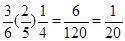 . . |
|
B) |
The probability that we choose a blue ball the first time isas there are three blue balls and six balls total. Following similar reasoning, the second blue-ball draw has a probability and the last one, a probability of . The probability of obtaining three blue balls consecutively is . This option is incorrect. |
|
C) |
The probability that we choose a blue ball the first time is as there are three blue balls and six balls total. Following similar reasoning, the second blue-ball draw has a probability and the last one, a probability of . The probability of obtaining three blue balls consecutively is . This option is incorrect. |
|
D) |
The probability that we choose a blue ball the first time is as there are three blue balls and six balls total. Following similar reasoning, the second blue-ball draw has a probability and the last one, a probability of . The probability of obtaining three blue balls consecutively is . This option is incorrect. |
|
E) |
The probability that we choose a blue ball the first time is as there are three blue balls and six balls total. Following similar reasoning, the second blue-ball draw has a probability and the last one, a probability of . The probability of obtaining three blue balls consecutively is . This option is incorrect. |
| . | | | | 7 | | | How many times would the number 2 be written when writing numbers from 1 to 10,000?
| | 0 | Opción múltiple | | C | |
A) |
There are no number 2’s in 10,000 so we will count only the number of number 2’s from 1 to 9,999. There are  ways to place one number in four places. Setting aside the place for the number 2 we have written, we need to count the different combinations we can make using the other possible numbers for each of the other places. We, hereby, obtain a total of ways to place one number in four places. Setting aside the place for the number 2 we have written, we need to count the different combinations we can make using the other possible numbers for each of the other places. We, hereby, obtain a total of  times number 2 is written only once. Similarly, there are times number 2 is written only once. Similarly, there are 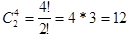 ways to place two numbers in four places. The number of times number 2 appears twice is ways to place two numbers in four places. The number of times number 2 appears twice is  . The number of times you can place three numbers in four places is . The number of times you can place three numbers in four places is 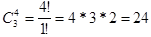 . The number of times 2 appears three times is . The number of times 2 appears three times is  . There is one way to place four numbers in four places so, for this number (i.e. 2,222) number 2 appears 4 times. Adding each of these cases, we obtain the number of times number 2 is written in all numbers from 1 to 10,000. . There is one way to place four numbers in four places so, for this number (i.e. 2,222) number 2 appears 4 times. Adding each of these cases, we obtain the number of times number 2 is written in all numbers from 1 to 10,000.  . This option is incorrect. . This option is incorrect. |
|
B) |
There are no number 2’s in 10,000 so we will count only the number of number 2’s from 1 to 9,999. There are ways to place one number in four places. Setting aside the place for the number 2 we have written, we need to count the different combinations we can make using the other possible numbers for each of the other places. We, hereby, obtain a total of times number 2 is written only once. Similarly, there are ways to place two numbers in four places. The number of times number 2 appears twice is . The number of times you can place three numbers in four places is . The number of times 2 appears three times is . There is one way to place four numbers in four places so, for this number (i.e. 2,222) number 2 appears 4 times. Adding each of these cases, we obtain the number of times number 2 is written in all numbers from 1 to 10,000. . This option is incorrect. |
|
C) |
This is the correct option. There are no number 2’s in 10,000 so we will count only the number of number 2’s from 1 to 9,999. There are ways to place one number in four places. Setting aside the place for the number 2 we have written, we need to count the different combinations we can make using the other possible numbers for each of the other places. We, hereby, obtain a total of times number 2 is written only once. Similarly, there are ways to place two numbers in four places. The number of times number 2 appears twice is . The number of times you can place three numbers in four places is . The number of times 2 appears three times is . There is one way to place four numbers in four places so, for this number (i.e. 2,222) number 2 appears 4 times. Adding each of these cases, we obtain the number of times number 2 is written in all numbers from 1 to 10,000.  . . |
|
D) |
There are no number 2’s in 10,000 so we will count only the number of number 2’s from 1 to 9,999. There are ways to place one number in four places. Setting aside the place for the number 2 we have written, we need to count the different combinations we can make using the other possible numbers for each of the other places. We, hereby, obtain a total of times number 2 is written only once. Similarly, there are ways to place two numbers in four places. The number of times number 2 appears twice is . The number of times you can place three numbers in four places is . The number of times 2 appears three times is . There is one way to place four numbers in four places so, for this number (i.e. 2,222) number 2 appears 4 times. Adding each of these cases, we obtain the number of times number 2 is written in all numbers from 1 to 10,000. . This option is incorrect. |
|
E) |
There are no number 2’s in 10,000 so we will count only the number of number 2’s from 1 to 9,999. There are ways to place one number in four places. Setting aside the place for the number 2 we have written, we need to count the different combinations we can make using the other possible numbers for each of the other places. We, hereby, obtain a total of times number 2 is written only once. Similarly, there are ways to place two numbers in four places. The number of times number 2 appears twice is . The number of times you can place three numbers in four places is . The number of times 2 appears three times is . There is one way to place four numbers in four places so, for this number (i.e. 2,222) number 2 appears 4 times. Adding each of these cases, we obtain the number of times number 2 is written in all numbers from 1 to 10,000. . This option is incorrect. |
| . | | | | 8 | | | How many six-character computer passwords can be generated using the letters in the name Rafael without repetition or capital letter distinction?
| | 0 | Opción múltiple | A) 0;#
B) 2;#
C) 12;#
D) 360;#
E) 1,814,400 | A | |
A) |
This is the correct option. The letter ‘a’ repeats so Rafael is not a valid password. To generate other passwords using the same letters, we would have to repeat letters. |
|
B) |
The letter ‘a’ repeats so Rafael is not a valid password. To generate other passwords using the same letters, we would have to repeat letters. This option is incorrect. |
|
C) |
The letter ‘a’ repeats so Rafael is not a valid password. To generate other passwords using the same letters, we would have to repeat letters. This option is incorrect. |
|
D) |
The letter ‘a’ repeats so Rafael is not a valid password. To generate other passwords using the same letters, we would have to repeat letters. This option is incorrect. |
|
E) |
The letter ‘a’ repeats so Rafael is not a valid password. To generate other passwords using the same letters, we would have to repeat letters. This option is incorrect. |
| . | | | | 9 | | | When two six-sided die numbered from 1-6 are tossed, is it more probable that the sum of the die equals 5 or 7?
| | 0 | Opción múltiple |
;#
;# |
C) |
It is equally probable. |
;# |
D) |
It depends on which dice is thrown first. ;# |
| B | |
A) |
To add up to five, a pair of six-sided die can have the following combinations: (2,3), (3,2), (1,4), (4,1). To add up to seven the die could be in the following combinations: (1,6), (6,1), (2,5), (5,2), (3,4), (4,3). We have more combinations for adding up to 7. This option is incorrect. |
|
B) |
This is the correct option. To add up to five, a pair of six-sided die can have the following combinations: (2,3), (3,2), (1,4), (4,1). To add up to seven the die could be in the following combinations: (1,6), (6,1), (2,5), (5,2), (3,4), (4,3). We have more combinations for adding up to 7. |
|
C) |
To add up to five, a pair of six-sided die can have the following combinations: (2,3), (3,2), (1,4), (4,1). To add up to seven the die could be in the following combinations: (1,6), (6,1), (2,5), (5,2), (3,4), (4,3). We have more combinations for adding up to 7. This option is incorrect. |
|
D) |
To add up to five, a pair of six-sided die can have the following combinations: (2,3), (3,2), (1,4), (4,1). To add up to seven the die could be in the following combinations: (1,6), (6,1), (2,5), (5,2), (3,4), (4,3). We have more combinations for adding up to 7. This option is incorrect. |
|
E) |
To add up to five, a pair of six-sided die can have the following combinations: (2,3), (3,2), (1,4), (4,1). To add up to seven the die could be in the following combinations: (1,6), (6,1), (2,5), (5,2), (3,4), (4,3). We have more combinations for adding up to 7. This option is incorrect. |
| . | | | | 10 | | | A parallelogram for which three sides measure  is inscribed in a circle. What is an expression for the area between the circle and the parallelogram?
| | 0 | Opción múltiple |
;#
;#
;# |
D) |
 ;# |
| B | |
A) |
If three of the sides of a parallelogram measure , then the parallelogram is necessarily a square. The diagonal of this a-sided square measures . The area for the circle is . The area for the circle is where where is the diameter of the circle. The circle’s diameter coincides with the square’s diagonal, which allows us to express the circle’s area as is the diameter of the circle. The circle’s diameter coincides with the square’s diagonal, which allows us to express the circle’s area as  . This same expression, when simplified, is . Then the area of the circle minus the area of the square is . This same expression, when simplified, is . Then the area of the circle minus the area of the square is or or  . This option is incorrect. . This option is incorrect. |
|
B) |
This is the correct option. If three of the sides of a parallelogram measure , then the parallelogram is necessarily a square. The diagonal of this a-sided square measures. The area for the circle iswhereis the diameter of the circle. The circle’s diameter coincides with the square’s diagonal, which allows us to express the circle’s area as . This same expression, when simplified, is . Then the area of the circle minus the area of the square isor . This is the expression we are after. |
|
C) |
If three of the sides of a parallelogram measure , then the parallelogram is necessarily a square. The diagonal of this a-sided square measures. The area for the circle iswhereis the diameter of the circle. The circle’s diameter coincides with the square’s diagonal, which allows us to express the circle’s area as . This same expression, when simplified, is . Then the area of the circle minus the area of the square isor . This option is incorrect. |
|
D) |
If three of the sides of a parallelogram measure , then the parallelogram is necessarily a square. The diagonal of this a-sided square measures. The area for the circle iswhereis the diameter of the circle. The circle’s diameter coincides with the square’s diagonal, which allows us to express the circle’s area as . This same expression, when simplified, is . Then the area of the circle minus the area of the square isor . This option is incorrect. |
|
E) |
If three of the sides of a parallelogram measure , then the parallelogram is necessarily a square. The diagonal of this a-sided square measures. The area for the circle iswhereis the diameter of the circle. The circle’s diameter coincides with the square’s diagonal, which allows us to express the circle’s area as . This same expression, when simplified, is . Then the area of the circle minus the area of the square isor . This option is incorrect. |
| . | | | | 11 | | | What is the area of a circular ring of grass whose inner diameter is  , and external circumference is  ?
| | 0 | Opción múltiple | |
A) |

|
;# |
B) |

|
;# |
C) |

|
;# |
D) |
 ;# ;#
|
|
E) |

|
| D | | . | | | | 12 | | | Which equation describes the line that forms a  angle with the  line?
| | 0 | Opción múltiple | A)  ;#
B)  ;#
C)  ;#
D)  ;#
E)  | C | |
A) |
The equation for a straight line is where where is the slope and is the slope and is its displacement fromat. If we take the displacement to be 0, we have a is its displacement fromat. If we take the displacement to be 0, we have a triangle that has a triangle that has a  ratio relating its sides. We can then use the ratio to know a point other than (0,0) through which the line passes, (i.e. ratio relating its sides. We can then use the ratio to know a point other than (0,0) through which the line passes, (i.e. ). Substituting these points inwe obtain ). Substituting these points inwe obtain . And substituting this result in, we obtain the equation. This is the equation for all lines forming aangle with. This answer is incorrect. . And substituting this result in, we obtain the equation. This is the equation for all lines forming aangle with. This answer is incorrect. |
|
B) |
The equation for a straight line iswhereis the slope andis its displacement fromat. If we take the displacement to be 0, we have atriangle that has a ratio relating its sides. We can then use the ratio to know a point other than (0,0) through which the line passes, (i.e.). Substituting these points inwe obtain. And substituting this result in, we obtain the equation. This is the equation for all lines forming aangle with. This answer is incorrect. |
|
C) |
This is the correct option. The equation for a straight line iswhereis the slope andis its displacement fromat. If we take the displacement to be 0, we have atriangle that has a ratio relating its sides. We can then use the ratio to know a point other than (0,0) through which the line passes, (i.e.). Substituting these points inwe obtain. And substituting this result in, we obtain the equation. This is the equation for all lines forming aangle with. |
|
D) |
The equation for a straight line iswhereis the slope andis its displacement fromat. If we take the displacement to be 0, we have atriangle that has a ratio relating its sides. We can then use the ratio to know a point other than (0,0) through which the line passes, (i.e.). Substituting these points inwe obtain. And substituting this result in, we obtain the equation. This is the equation for all lines forming aangle with. This answer is incorrect. |
|
E) |
The equation for a straight line iswhereis the slope andis its displacement fromat. If we take the displacement to be 0, we have atriangle that has a ratio relating its sides. We can then use the ratio to know a point other than (0,0) through which the line passes, (i.e.). Substituting these points inwe obtain. And substituting this result in, we obtain the equation. This is the equation for all lines forming aangle with. This answer is incorrect. |
| . | | | | 13 | | | What is the area of a square parking lot that measures  diagonally?
| | 0 | Opción múltiple |
;#
;#
;# |
D) |
 ;# |
| A | |
A) |
This is the correct option. The diagonal of a square whose sides measure is is . The side of the parking lot is . The side of the parking lot is . The area is . The area is . . |
|
B) |
The diagonal of a square whose sides measureis. The side of the parking lot is. The area is. This option is incorrect. |
|
C) |
The diagonal of a square whose sides measureis. The side of the parking lot is. The area is. This option is incorrect. |
|
D) |
The diagonal of a square whose sides measureis. The side of the parking lot is. The area is. This option is incorrect. |
|
E) |
The diagonal of a square whose sides measureis. The side of the parking lot is. The area is. This option is incorrect. |
| . | | | | 14 | | | What is the equation to describe a line passing through (-5,3) and is parallel to the x-axis?
| | 0 | Opción múltiple | A)  ;# ;#
B)  ;# ;#
C)   ;# ;#
D);#
E) 
| A | |
A) |
This is the correct option. The equation for a straight line is, whereis the slope andis its displacement fromat. A line parallel to the -axis has the same value of for everyand a slope equal to zero. The equation for such a line is, so that it passes through (-5,3), as the problem states. for everyand a slope equal to zero. The equation for such a line is, so that it passes through (-5,3), as the problem states. |
|
B) |
The equation for a straight line is, whereis the slope andis its displacement fromat. A line parallel to the -axis has the same value offor everyand a slope equal to zero. The equation for such a line is, so that it passes through (-5,3), as the problem states. This option is incorrect. |
|
C) |
The equation for a straight line is, whereis the slope andis its displacement fromat. A line parallel to the -axis has the same value offor every, and a slope equal to zero. The equation for such a line is, so that it passes through (-5,3), as the problem states. This option is incorrect. |
|
D) |
The equation for a straight line is, whereis the slope andis its displacement fromat. A line parallel to the -axis has the same value offor everyand a slope equal to zero. The equation for such a line is, so that it passes through (-5,3), as the problem states. This option is incorrect. |
|
E) |
The equation for a straight line is, whereis the slope andis its displacement fromat. A line parallel to the -axis has the same value offor everyand a slope equal to zero. The equation for such a line is, so that it passes through (-5,3), as the problem states. This option is incorrect. |
| . | | | | 15 | | | If a huge bird is spotted over the horizontal plane and 1 mile measured from the base of a certain building, how far is the bird from the observer?
| | 0 | Opción múltiple |
;# |
B) |
 mile mile |
;#
;# |
D) |
 miles ;# miles ;# |
|
E) |
 miles miles |
| C | |
A) |
The angle that the horizontal plane and the building make is a right angle. Given that another angle in the (observer, base, bird) triangle isthe remaining angle must be a  angle. This triangle has a ratio among its sides. The longest distance is the hypotenuse and it is the one we are looking for. The distance to the bird is 2 miles. This option is incorrect. angle. This triangle has a ratio among its sides. The longest distance is the hypotenuse and it is the one we are looking for. The distance to the bird is 2 miles. This option is incorrect. |
|
B) |
The angle that the horizontal plane and the building make is a right angle. Given that another angle in the (observer, base, bird) triangle isthe remaining angle must be a angle. This triangle has a ratio among its sides. The longest distance is the hypotenuse and it is the one we are looking for. The distance to the bird is 2 miles. This option is incorrect. |
|
C) |
This is the correct answer. The angle that the horizontal plane and the building make is a right angle. Given that another angle in the (observer, base, bird) triangle isthe remaining angle must be a angle. This triangle has a ratio among its sides. The longest distance is the hypotenuse and it is the one we are looking for. The distance to the bird is 2 miles. |
|
D) |
The angle that the horizontal plane and the building make is a right angle. Given that another angle in the (observer, base, bird) triangle isthe remaining angle must be a angle. This triangle has a ratio among its sides. The longest distance is the hypotenuse and it is the one we are looking for. The distance to the bird is 2 miles. This option is incorrect. |
|
E) |
The angle that the horizontal plane and the building make is a right angle. Given that another angle in the (observer, base, bird) triangle isthe remaining angle must be a angle. This triangle has a ratio among its sides. The longest distance is the hypotenuse and it is the one we are looking for. The distance to the bird is 2 miles. This option is incorrect. |
| . | | | | 16 | | | A clock that consistently gains 12 seconds every 2 hours is set to read midday. What is the time the clock displays at noon 13 days later?
| | 0 | Opción múltiple | | E | |
A) |
The amount in hours that 13 days spans is  . The seconds the clock has gained in that time is . The seconds the clock has gained in that time is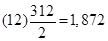 which is which is  minutes. One fifth of a minute is 12 seconds, so the time the clock will display is 31minutes and 12 seconds past noon. This option is incorrect. minutes. One fifth of a minute is 12 seconds, so the time the clock will display is 31minutes and 12 seconds past noon. This option is incorrect. |
|
B) |
The amount in hours that 13 days spans is . The seconds the clock has gained in that time iswhich is minutes. One fifth of a minute is 12 seconds, so the time the clock will display is 31minutes and 12 seconds past noon. This option is incorrect. |
|
C) |
The amount in hours that 13 days spans is . The seconds the clock has gained in that time iswhich is minutes. One fifth of a minute is 12 seconds, so the time the clock will display is 31minutes and 12 seconds past noon. This option is incorrect. |
|
D) |
The amount in hours that 13 days spans is . The seconds the clock has gained in that time iswhich is minutes. One fifth of a minute is 12 seconds, so the time the clock will display is 31minutes and 12 seconds past noon. This option is incorrect. |
|
E) |
This is the correct option. The amount in hours that 13 days spans is . The seconds the clock has gained in that time iswhich is minutes. One fifth of a minute is 12 seconds, so the time the clock will display is 31minutes and 12 seconds past noon. |
| . | | | | 17 | | | A certain man takes a train to Chicago three times a week at regular intervals. A certain woman takes the same trip eight times every three weeks at regular intervals. How many times do these two passengers take the same train in a year?
| | 0 | Opción múltiple | | C | | . | | | | 18 | | | If a gas tank is 3/8th full and reaches ½ its capacity when 25 liters are added it, what is the tank’s full capacity?
| | 0 | Opción múltiple | | D | | . | | | | 19 | | | What is the number in the units-position of  ?
| | 0 | Opción múltiple | | A | |
A) |
This is the correct answer. Whenever a number has a 5 in the units position, all the powers of such number will have 5 in the units position. |
|
B) |
Whenever a number has a 5 in the units position, all the powers of such number will have 5 in the units position. This option is incorrect. |
|
C) |
Whenever a number has a 5 in the units position, all the powers of such number will have 5 in the units position. Besides, you can only place one digit in the units position. This option is incorrect. |
|
D) |
Whenever a number has a 5 in the units position, all the powers of such number will have 5 in the units position. Besides, you can only place one digit in the units position. This option is incorrect. |
|
E) |
Whenever a number has a 5 in the units position, all the powers of such number will have 5 in the units position. This option is incorrect. |
| . | | | | 20 | | | A certain stadium sells tickets at 4/5th the normal price for 1/8th of its seating capacity. If the remaining 117,649 tickets are sold full price for $125 and the stadium fills to capacity, how much money is the stadium administration not receiving due to the discount?
| | 0 | Opción múltiple | | E | |
A) |
Ifis the stadium capacity we know , and we are looking for the number of tickets that is , and we are looking for the number of tickets that is . Solving the first equation forand substituting the result in we have the number of tickets sold at half price . Solving the first equation forand substituting the result in we have the number of tickets sold at half price 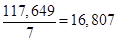 . .  , so $25 dollars are lost in each of these tickets. The total loss is , so $25 dollars are lost in each of these tickets. The total loss is . This option is incorrect. . This option is incorrect. |
|
B) |
Ifis the stadium capacity we know, and we are looking for the number of tickets that is. Solving the first equation forand substituting the result in we have the number of tickets sold at half price . , so $25 dollars are lost in each of these tickets. The total loss is. This option is incorrect. |
|
C) |
Ifis the stadium capacity we know, and we are looking for the number of tickets that is. Solving the first equation forand substituting the result in we have the number of tickets sold at half price . , so $25 dollars are lost in each of these tickets. The total loss is. This option is incorrect. |
|
D) |
Ifis the stadium capacity we know, and we are looking for the number of tickets that is. Solving the first equation forand substituting the result in we have the number of tickets sold at half price . , so $25 dollars are lost in each of these tickets. The total loss is. This option is incorrect. |
|
E) |
This is the correct option. Ifis the stadium capacity we know, and we are looking for the number of tickets that is. Solving the first equation forand substituting the result in we have the number of tickets sold at half price . , so $25 dollars are lost in each of these tickets. The total loss is. |
| . | | | | 21 | | | What is the value of  ?
| | 0 | Opción múltiple | |
A) |

|
;# |
B) |

|
;# |
C) |

|
;# |
D) |
 ;# ;#
|
|
E) |

|
| A | |
A) |
This is the correct option. =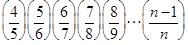 =. We simplified each fraction, and then each denominator cancels the numerator of the following fraction starting with 5 as a denominator. We are left with the first numerator and the last denominator. =. We simplified each fraction, and then each denominator cancels the numerator of the following fraction starting with 5 as a denominator. We are left with the first numerator and the last denominator. |
|
B) |
 ==. We simplified each fraction, and then each denominator cancels the numerator of the following fraction starting with 5 as a denominator. We are left with the first numerator and the last denominator. This option is incorrect. ==. We simplified each fraction, and then each denominator cancels the numerator of the following fraction starting with 5 as a denominator. We are left with the first numerator and the last denominator. This option is incorrect.
|
|
C) |
==. We simplified each fraction, and then each denominator cancels the numerator of the following fraction starting with 5 as a denominator. We are left with the first numerator and the last denominator. This option is incorrect. |
|
D) |
 ==. We simplified each fraction, and then each denominator cancels the numerator of the following fraction starting with 5 as a denominator. We are left with the first numerator and the last denominator. This option is incorrect. ==. We simplified each fraction, and then each denominator cancels the numerator of the following fraction starting with 5 as a denominator. We are left with the first numerator and the last denominator. This option is incorrect.
|
|
E) |
==. We simplified each fraction, and then each denominator cancels the numerator of the following fraction starting with 5 as a denominator. We are left with the first numerator and the last denominator. This option is incorrect. |
| . | | | | 22 | | | A certain music CD is $12 dollars at its regular price. If the music store has a promotional 12% discount on the label and an additional 10% off all music CD’s, what is the equivalent discount for that CD.
| | 0 | Opción múltiple | | C | |
A) |
The original price is $12. With a 12% discount the price is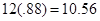 . With an additional 10% off the price is . With an additional 10% off the price is . This is equivalent to . This is equivalent to or 79.2% of the original price. Therefore, the equivalent discount is 100-79.2=20.8 percent. This option is incorrect. or 79.2% of the original price. Therefore, the equivalent discount is 100-79.2=20.8 percent. This option is incorrect. |
|
B) |
The original price is $12. With a 12% discount the price is. With an additional 10% off the price is. This is equivalent toor 79.2% of the original price. Therefore, the equivalent discount is 100-79.2=20.8 percent. This option is incorrect. |
|
C) |
This is the correct option. The original price is $12. With a 12% discount the price is. With an additional 10% off the price is. This is equivalent toor 79.2% of the original price. Therefore, the equivalent discount is 100-79.2=20.8 percent. |
|
D) |
The original price is $12. With a 12% discount the price is. With an additional 10% off the price is. This is equivalent toor 79.2% of the original price. Therefore, the equivalent discount is 100-79.2=20.8 percent. This option is incorrect. |
|
E) |
The original price is $12. With a 12% discount the price is. With an additional 10% off the price is. This is equivalent toor 79.2% of the original price. Therefore, the equivalent discount is 100-79.2=20.8 percent. This option is incorrect. |
| . | | | | 23 | | | If a worker’s salary increases from 15,012 to 15,598 dollars, what is the approximate percent increase in his salary?
| | 0 | Opción múltiple | | C | |
A) |
The percent increase is . This option is incorrect. . This option is incorrect. |
|
B) |
The percent increase is. This option is incorrect. |
|
C) |
This is the correct option. The percent increase is. |
|
D) |
The percent increase is. This option is incorrect. |
|
E) |
The percent increase is. This option is incorrect. |
| . | | | | 24 | | | A certain gold mine deposit has a mineral composition that is 0.0003% gold. The extraction process is 83% effective at retrieving gold from that mineral composition. How many tons, of this mineral composition, need to be processed to get 25 grams of gold?
| | 0 | Opción múltiple | | D | |
A) |
If you process 1 ton=1000kg of material whose mineral composition is 0.0003% gold, you have 1000(0.000003)= 0.003kg. or 3gr. of gold per ton in the mine’s deposit. This gives an amount of 3(.83)= 2.49gr. after recovery. To get 25grams you need to process tons of the mineral composition. This option is incorrect. tons of the mineral composition. This option is incorrect. |
|
B) |
If you process 1 ton=1000kg of material whose mineral composition is 0.0003% gold, you have 1000(0.000003)= 0.003kg. or 3gr. of gold per ton in the mine’s deposit. This gives an amount of 3(.83)= 2.49gr. after recovery. To get 25grams you need to processtons of the mineral composition. This option is incorrect. |
|
C) |
If you process 1 ton=1000kg of material whose mineral composition is 0.0003% gold, you have 1000(0.000003)= 0.003kg. or 3gr. of gold per ton in the mine’s deposit. This gives an amount of 3(.83)= 2.49gr. after recovery. To get 25grams you need to processtons of the mineral composition. This option is incorrect. |
|
D) |
This is the correct option. If you process 1 ton=1000kg of material whose mineral composition is 0.0003% gold, you have 1000(0.000003)= 0.003kg. or 3gr. of gold per ton in the mine’s deposit. This gives an amount of 3(.83)= 2.49gr. after recovery. To get 25grams you need to processtons of the mineral composition. |
|
E) |
If you process 1 ton=1000kg of material whose mineral composition is 0.0003% gold, you have 1000(0.000003)= 0.003kg. or 3gr. of gold per ton in the mine’s deposit. This gives an amount of 3(.83)= 2.49gr. after recovery. To get 25grams you need to processtons of the mineral composition. This option is incorrect. |
| . | | | | 25 | | | Swimming at 2/3rds maximum speed, a person covers 2.8km in 50 minutes. What distance would this person cover in 2 days swimming at ½ the maximum speed?
| | 0 | Opción múltiple | | C | |
A) |
The swimmer swims at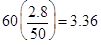 km/hr when swimming at 2/3 maximum speed. The maximum swimming speed is km/hr when swimming at 2/3 maximum speed. The maximum swimming speed is or or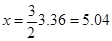 km/hr. Swimming at half this speed, the swimmer would swim km/hr. Swimming at half this speed, the swimmer would swim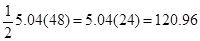 km. This option is incorrect. km. This option is incorrect. |
|
B) |
The swimmer swims atkm/hr when swimming at 2/3 maximum speed. The maximum swimming speed isorkm/hr. Swimming at half this speed, the swimmer would swimkm. This option is incorrect. |
|
C) |
This is the correct option. The swimmer swims atkm/hr when swimming at 2/3 maximum speed. The maximum swimming speed isorkm/hr. Swimming at half this speed, the swimmer would swimkm. |
|
D) |
The swimmer swims atkm/hr when swimming at 2/3 maximum speed. The maximum swimming speed isorkm/hr. Swimming at half this speed, the swimmer would swimkm. This option is incorrect. |
|
E) |
The swimmer swims atkm/hr when swimming at 2/3 maximum speed. The maximum swimming speed isorkm/hr. Swimming at half this speed, the swimmer would swimkm. This option is incorrect. |
| . | | | | 26 | | Question 26 of 50
 Instructions
This section tests your ability to answer Quantitative Comparison questions in the Quantitative part of the GRE. You are given a problem statement and some information relating to the context in which the problem is set. You will be given two quantities, one in column A and the other in column B. You are to consider the relative amounts the two quantities represent given the problem, and choose one of the provided answer choices. The answer choices in this section are:
A, if the quantity in column A is greater than the one in column B.
B, if the quantity in column B is the greater one.
C, if both quantities are equal.
D, is the information provided in the problem statement and in the columns is not sufficient to determine the relation between the quantities.
You should consider the numbers used in these problems to be real numbers, unless otherwise stated. All geometrical figures, i.e. triangles, in this lab should be considered to lie in a plane. You should never select E as the answer choice as only options A-D are valid in this section of the GRE. You should take no more than 2 minutes per question.
|  is an integer, and  . |
Column A |
Column B |
 of  |
 of  |
| | 0 | Opción múltiple | A) The quantity in column A is greater than that in column B.;# B) The quantity in column B is greater than that in column A.;# C) Both quantities in column A and B are equal.;# D) The information provided in both columns and the problem statement is insufficient to determine the relation between the quantities.;# E) This option is incorrect.
| B | |
|
|
|
A) |
If we take  , we get  . of  . Now, taking the same value for and the quantity in column B we have 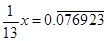 and  . Column B is greater than column A. This option is incorrect. |
|
B) |
This is the correct option. If we take, we get. of. Now, taking the same value forand the quantity in column B we haveand. Column B is greater than column A. |
|
C) |
If we take , we get . of . Now, taking the same value for and the quantity in column B we have and . Column B is greater than column A. This option is incorrect. |
|
D) |
If we take , we get . of . Now, taking the same value for and the quantity in column B we have and . Column B is greater than column A. This option is incorrect. |
|
E) |
You should never select E as the answer choice as only options A-D are valid in this section of the GRE. |
| . | | | | 27 | | | | | 0 | Opción múltiple | A) The quantity in column A is greater than that in column B.;#
B) The quantity in column B is greater than that in column A.;#
C) Both quantities in column A and B are equal.;#
D) The information provided in both columns and the problem statement is insufficient to determine the relation between the quantities.;#
E) This option is incorrect.
| B | |
|
|
|
A) |
Solve  for and  . For we get  , and for ,  . Stating the equation for in the same form  , we can see that for all positive values  . Therefore, column B is greater than column A. This option is incorrect. |
|
B) |
This is the correct option. Solveforand. Forwe get, and for,. Stating the equation forin the same form, we can see that for all positive values . Therefore, column B is greater than column A. |
|
C) |
Solve for and . For we get , and for , . Stating the equation for in the same form , we can see that for all positive values . Therefore, column B is greater than column A. This option is incorrect. |
|
D) |
Solve for and . For we get , and for , . Stating the equation for in the same form , we can see that for all positive values . Therefore, column B is greater than column A. This option is incorrect. |
|
E) |
You should never select E as the answer choice as only options A-D are valid in this section of the GRE. |
| . | | | | 28 | | | A girl spends 20% of her allowance money on candies. She then spends $5 on food, and she still has 20% of her allowance left. |
Column A |
Column B |
$2 |
What is left of her allowance |
| | 0 | Opción múltiple | A) The quantity in column A is greater than that in column B.;#
B) The quantity in column B is greater than that in column A.;#
C) Both quantities in column A and B are equal.;#
D) The information provided in both columns and the problem statement is insufficient to determine the relation between the quantities.;#
E) This option is incorrect.
| A | |
|
|
|
A) |
This is the correct option. If she spent 20% on candies and she still has 20%, then $5=60%, whereis her total allowance. Solving for we get het allowance to be  . What is left of her allowance is . What is left of her allowance is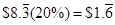 . Comparing the two quantities, we have that . Comparing the two quantities, we have that . . |
|
B) |
If she spent 20% on candies and she still has 20%, then $5=60% , where is her total allowance. Solving for we get het allowance to be . What is left of her allowance is . Comparing the two quantities, we have that . This option is incorrect. |
|
C) |
If she spent 20% on candies and she still has 20%, then $5=60% , where is her total allowance. Solving for we get het allowance to be . What is left of her allowance is . Comparing the two quantities, we have that . This option is incorrect. |
|
D) |
If she spent 20% on candies and she still has 20%, then $5=60% , where is her total allowance. Solving for we get het allowance to be . What is left of her allowance is . Comparing the two quantities, we have that . This option is incorrect. |
|
E) |
You should never select E as the answer choice as only options A-D are valid in this section of the GRE. |
| . | | | | 29 | | | | | 0 | Opción múltiple | A) The quantity in column A is greater than that in column B. ;#
B) The quantity in column B is greater than that in column A. ;#
C) Both quantities in column A and B are equal. ;#
D) The information provided in both columns and the problem statement is insufficient to determine the relation between the quantities. ;#
E) This option is incorrect.
| D | |
|
|
|
A) |
For negative values, the quantity closest to zero is the greatest. The greater the denominator, the smaller the fraction. Column B is smaller, so column B is closer to zero. Column B is the greater quantity for negative values of x. For positive values, the opposite happens. We, therefore, do not have enough information to determine the relation between the columns. This option is incorrect. |
|
B) |
For negative values, the quantity closest to zero is the greatest. The greater the denominator, the smaller the fraction. Column B is smaller, so column B is closer to zero. Column B is the greater quantity for negative values of x. For positive values, the opposite happens. We, therefore, do not have enough information to determine the relation between the columns. This option is incorrect. |
|
C) |
For negative values, the quantity closest to zero is the greatest. The greater the denominator, the smaller the fraction. Column B is smaller, so column B is closer to zero. Column B is the greater quantity for negative values of x. For positive values, the opposite happens. We, therefore, do not have enough information to determine the relation between the columns. This option is incorrect. |
|
D) |
This is the correct option. For negative values, the quantity closest to zero is the greatest. The greater the denominator, the smaller the fraction. Column B is smaller, so column B is closer to zero. Column B is the greater quantity for negative values of x. For positive values, the opposite happens. We, therefore, do not have enough information to determine the relation between the columns. |
|
E) |
You should never select E as the answer choice as only options A-D are valid in this section of the GRE. |
| . | | | | 30 | | | is a multiple of 5 and 6. |
Column A |
Column B |
|
|
| | 0 | Opción múltiple | A) The quantity in column A is greater than that in column B.;#
B) The quantity in column B is greater than that in column A.;#
C) Both quantities in column A and B are equal.;#
D) The information provided in both columns and the problem statement is insufficient to determine the relation between the quantities.;#
E) This option is incorrect.
| D | |
|
|
|
A) |
The relation between the columns cannot be determined because could take either positive or negative values and the relation is different for each case. This option is incorrect. |
|
B) |
The relation between the columns cannot be determined because could take either positive or negative values and the relation is different for each case. This option is incorrect. |
|
C) |
The relation between the columns cannot be determined because could take either positive or negative values and the relation is different for each case. This option is incorrect. |
|
D) |
This is the correct option. The relation between the columns cannot be determined becausecould take either positive or negative values and the relation is different for each case. |
|
E) |
You should never select E as the answer choice as only options A-D are valid in this section of the GRE. |
| . | | | | 31 | | | Figure A is an n-sided polygon inscribed in circle B.  |
Column A |
Column B |
The circumference of circle B |
The perimeter of the polygon |
| | 0 | Opción múltiple | A) The quantity in column A is greater than that in column B.;#
B) The quantity in column B is greater than that in column A.;#
C) Both quantities in column A and B are equal.;#
D) The information provided in both columns and the problem statement is insufficient to determine the relation between the quantities.;#
E) This option is incorrect.
| A | |
|
|
|
A) |
This is the correct option. The perimeter of any polygon inscribed in a circle will be less than the circumference of that circle. |
|
B) |
The perimeter of any polygon inscribed in a circle will be less than the circumference of that circle. This option is incorrect. |
|
C) |
The perimeter of any polygon inscribed in a circle will be less than the circumference of that circle. This option is incorrect. |
|
D) |
The perimeter of any polygon inscribed in a circle will be less than the circumference of that circle. This option is incorrect. |
|
E) |
You should never select E as the answer choice as only options A-D are valid in this section of the GRE. |
| . | | | | 32 | | | A triangle has sides  ,  ,and  . |
Column A |
Column B |
The area of the triangle |
3 |
| | 0 | Opción múltiple | A) The quantity in column A is greater than that in column B.;#
B) The quantity in column B is greater than that in column A.;#
C) Both quantities in column A and B are equal.;#
D) The information provided in both columns and the problem statement is insufficient to determine the relation between the quantities.;#
E) This option is incorrect.
| B | |
|
|
|
A) |
The area of triangle ABC is zero because line segments  +  =  . This is, the “triangle” is a straight line and it has no area.  . This option is incorrect. |
|
B) |
This is the correct option. The area of triangle ABC is zero because line segments+=. This is, the “triangle” is a straight line and it has no area. |
|
C) |
The area of triangle ABC is zero because line segments + = . This is, the “triangle” is a straight line and it has no area. . This option is incorrect. |
|
D) |
The area of triangle ABC is zero because line segments + = . This is, the “triangle” is a straight line and it has no area. . This option is incorrect. |
|
E) |
You should never select E as the answer choice as only options A-D are valid in this section of the GRE. |
| . | | | | 33 | | | A certain n-sided polygon and circle share the center point P. |
Column A |
Column B |
The perimeter of the circumscribed polygon |
The perimeter of the inscribed polygon |
| | 0 | Opción múltiple | A) The quantity in column A is greater than that in column B.;#
B) The quantity in column B is greater than that in column A.;#
C) Both quantities in column A and B are equal.;#
D) The information provided in both columns and the problem statement is insufficient to determine the relation between the quantities.;#
E) This option is incorrect.
| A | |
|
|
|
A) |
This is the correct option. That a polygon is circumscribed means the circle is inside the polygon, which would make the perimeter of the polygon greater than that of the circle. An inscribed polygon is a polygon inside a circle sharing the points that belong to its vertices with the circle. The perimeter of the polygon is smaller than that of the circle. |
|
B) |
That a polygon is circumscribed means the circle is inside the polygon, which would make the perimeter of the polygon greater than that of the circle. An inscribed polygon is a polygon inside a circle sharing the points that belong to its vertices with the circle. The perimeter of the polygon is smaller than that of the circle. This option is incorrect. |
|
C) |
That a polygon is circumscribed means the circle is inside the polygon, which would make the perimeter of the polygon greater than that of the circle. An inscribed polygon is a polygon inside a circle sharing the points that belong to its vertices with the circle. The perimeter of the polygon is smaller than that of the circle. This option is incorrect. |
|
D) |
That a polygon is circumscribed means the circle is inside the polygon, which would make the perimeter of the polygon greater than that of the circle. An inscribed polygon is a polygon inside a circle sharing the points that belong to its vertices with the circle. The perimeter of the polygon is smaller than that of the circle. This option is incorrect. |
|
E) |
You should never select E as the answer choice as only options A-D are valid in this section of the GRE. |
| . | | | | 34 | | | Two six-sided dice are tossed. |
Column A |
Column B |
The probability that the sum is 5 |
The probability that the sum is 6 |
| | 0 | Opción múltiple | A) The quantity in column A is greater than that in column B.;#
B) The quantity in column B is greater than that in column A.;#
C) Both quantities in column A and B are equal.;#
D) The information provided in both columns and the problem statement is insufficient to determine the relation between the quantities.;#
E) This option is incorrect.
| B | |
|
|
|
A) |
There are four ways we can get the sum to be five i.e. (1,4), (4,1), (2,3), and (3,2). There are 5 ways for the sum to be six i.e. (1,5), (5,1), (2,4), (4,2), and (3,3). Therefore, the probability for the sum to be six is greater than that for the sum to be five. This option is incorrect. |
|
B) |
This is the correct option. There are four ways we can get the sum to be five i.e. (1,4), (4,1), (2,3), and (3,2). There are 5 ways for the sum to be six i.e. (1,5), (5,1), (2,4), (4,2), and (3,3). Therefore, the probability for the sum to be six is greater than that for the sum to be five. |
|
C) |
There are four ways we can get the sum to be five i.e. (1,4), (4,1), (2,3), and (3,2). There are 5 ways for the sum to be six i.e. (1,5), (5,1), (2,4), (4,2), and (3,3). Therefore, the probability for the sum to be six is greater than that for the sum to be five. This option is incorrect. |
|
D) |
There are four ways we can get the sum to be five i.e. (1,4), (4,1), (2,3), and (3,2). There are 5 ways for the sum to be six i.e. (1,5), (5,1), (2,4), (4,2), and (3,3). Therefore, the probability for the sum to be six is greater than that for the sum to be five. This option is incorrect. |
|
E) |
You should never select E as the answer choice as only options A-D are valid in this section of the GRE. |
| . | | | | 35 | | | | | 0 | Opción múltiple | A) The quantity in column A is greater than that in column B.;#
B) The quantity in column B is greater than that in column A.;#
C) Both quantities in column A and B are equal.;#
D) The information provided in both columns and the problem statement is insufficient to determine the relation between the quantities.;#
E) This option is incorrect.
| A | |
|
|
|
A) |
This is the correct option. We know  and and  . The middle value between 144 and 169 is 156.5, so . The middle value between 144 and 169 is 156.5, so  > > . . |
|
B) |
We know and . The middle value between 144 and 169 is 156.5, so > . This option is incorrect. |
|
C) |
We know and . The middle value between 144 and 169 is 156.5, so > . This option is incorrect. |
|
D) |
We know and . The middle value between 144 and 169 is 156.5, so > . This option is incorrect. |
|
E) |
You should never select E as the answer choice as only options A-D are valid in this section of the GRE. |
| . | | | | 36 | | | | | 0 | Opción múltiple | A) The quantity in column A is greater than that in column B.;#
B) The quantity in column B is greater than that in column A.;#
C) Both quantities in column A and B are equal.;#
D) The information provided in both columns and the problem statement is insufficient to determine the relation between the quantities.;#
E) This option is incorrect.
| A | |
A) |
This is the correct option. The equation in column A yields 9+6=15. Column B yields 36/10=3.6. |
|
B) |
The equation in column A yields 9+6=15. Column B yields 36/10=3.6. This option is incorrect. |
|
C) |
The equation in column A yields 9+6=15. Column B yields 36/10=3.6. This option is incorrect. |
|
D) |
The equation in column A yields 9+6=15. Column B yields 36/10=3.6. This option is incorrect. |
|
E) |
You should never select E as the answer choice as only options A-D are valid in this section of the GRE. |
| . | | | | 37 | | | | | 0 | Opción múltiple | A) The quantity in column A is greater than that in column B.;#
B) The quantity in column B is greater than that in column A.;#
C) Both quantities in column A and B are equal.;#
D) The information provided in both columns and the problem statement is insufficient to determine the relation between the quantities.;#
E) This option is incorrect.
| A | |
|
|
|
A) |
This is the correct option. We know and and  , so , so . We also know . We also know and and , so column A is greater. , so column A is greater. |
|
B) |
We know and , so . We also know and , so column A is greater. This option is incorrect. |
|
C) |
We know and , so . We also know and , so column A is greater. This option is incorrect. |
|
D) |
We know and , so . We also know and , so column A is greater. This option is incorrect. |
|
E) |
You should never select E as the answer choice as only options A-D are valid in this section of the GRE. |
| . | | | | 38 | | | | | 0 | Opción múltiple | A) The quantity in column A is greater than that in column B.;#
B) The quantity in column B is greater than that in column A.;#
C) Both quantities in column A and B are equal.;#
D) The information provided in both columns and the problem statement is insufficient to determine the relation between the quantities.;#
E) This option is incorrect. | C | A) 2√2(√8) = 2(√(2*8)) = 2(√16) = 2(4) = 8. The quantities in both columns are equal. This option is incorrect. ;#
B) 2√2(√8) = 2(√(2*8)) = 2(√16) = 2(4) = 8. The quantities in both columns are equal.. This option is incorrect. ;#
C) This is the correct option. 2√2(√8) = 2(√(2*8)) = 2(√16) = 2(4) = 8. The quantities in both columns are equal. ;#
D) 2√2(√8) = 2(√(2*8)) = 2(√16) = 2(4) = 8. The quantities in both columns are equal. This option is incorrect. ;#
E) You should never select E as the answer choice as only options A-D are valid in this section of the GRE. | . | | | | 39 | | | | | 0 | Opción múltiple | A) The quantity in column A is greater than that in column B.;#
B) The quantity in column B is greater than that in column A.;#
C) Both quantities in column A and B are equal.;#
D) The information provided in both columns and the problem statement is insufficient to determine the relation between the quantities.;#
E) This option is incorrect.
| C | |
|
|
|
A) |
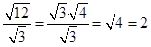 . The quantities in both columns are equal. This option is incorrect. |
|
B) |
. The quantities in both columns are equal. This option is incorrect. |
|
C) |
This is the correct option.. The quantities in both columns are equal. |
|
D) |
. The quantities in both columns are equal. This option is incorrect. |
|
E) |
You should never select E as the answer choice as only options A-D are valid in this section of the GRE. |
| . | | | | 40 | | | | | 0 | Opción múltiple | A) The quantity in column A is greater than that in column B.;#
B) The quantity in column B is greater than that in column A.;#
C) Both quantities in column A and B are equal.;#
D) The information provided in both columns and the problem statement is insufficient to determine the relation between the quantities.;#
E) This option is incorrect.
| B | |
|
|
|
A) |
If we divide 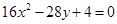 by 4 we get 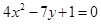 . We then have the relation  . Therefore  >  . This option is incorrect. |
|
B) |
This is the correct option. If we divide by 4 we get. We then have the relation. Therefore>. |
|
C) |
If we divide by 4 we get . We then have the relation . Therefore > . This option is incorrect. |
|
D) |
If we divide by 4 we get . We then have the relation . Therefore > . This option is incorrect. |
|
E) |
You should never select E as the answer choice as only options A-D are valid in this section of the GRE. |
| . | | | | 41 | | | | | 0 | Opción múltiple | A) The quantity in column A is greater than that in column B.;#
B) The quantity in column B is greater than that in column A.;#
C) Both quantities in column A and B are equal.;#
D) The information provided in both columns and the problem statement is insufficient to determine the relation between the quantities.;#
E) This option is incorrect.
| B | |
|
|
|
A) |
 , so column A is  .  , so column B is  . 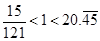 . This option is incorrect. |
|
B) |
This is the correct option., so column A is. , so column B is. . |
|
C) |
, so column A is . , so column B is . . This option is incorrect. |
|
D) |
, so column A is . , so column B is . . This option is incorrect. |
|
E) |
You should never select E as the answer choice as only options A-D are valid in this section of the GRE. |
| . | | | | 42 | | | | | 0 | Opción múltiple | A) The quantity in column A is greater than that in column B.;#
B) The quantity in column B is greater than that in column A.;#
C) Both quantities in column A and B are equal.;#
D) The information provided in both columns and the problem statement is insufficient to determine the relation between the quantities.;#
E) This option is incorrect.
| C | |
|
|
|
A) |
Solving  for we get  or  which can be factorized as 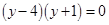 . This equation renders values  and  of which only satisfies the original equation. The values in the columns are, therefore, equal. This option is incorrect. |
|
B) |
Solving for we get or which can be factorized as . This equation renders values and of which only satisfies the original equation. The values in the columns are, therefore, equal. This option is incorrect. |
|
C) |
This is the correct option. Solvingforwe getorwhich can be factorized as. This equation renders valuesandof which onlysatisfies the original equation. The values in the columns are, therefore, equal. |
|
D) |
Solving for we get or which can be factorized as . This equation renders values and of which only satisfies the original equation. The values in the columns are, therefore, equal. This option is incorrect. |
|
E) |
You should never select E as the answer choice as only options A-D are valid in this section of the GRE. |
| . | | | | 43 | | | | | 0 | Opción múltiple | A) The quantity in column A is greater than that in column B.;#
B) The quantity in column B is greater than that in column A.;#
C) Both quantities in column A and B are equal.;#
D) The information provided in both columns and the problem statement is insufficient to determine the relation between the quantities.;#
E) This option is incorrect.
| A | |
|
|
|
A) |
This is the correct option. Multiplying both sides of the original equation bywe get or or . .  , so the quantity in column A is greater than that in column B. , so the quantity in column A is greater than that in column B. |
|
B) |
Multiplying both sides of the original equation by we get or . , so the quantity in column A is greater than that in column B. This option is incorrect. |
|
C) |
Multiplying both sides of the original equation by we get or . , so the quantity in column A is greater than that in column B. This option is incorrect. |
|
D) |
Multiplying both sides of the original equation by we get or . , so the quantity in column A is greater than that in column B. This option is incorrect. |
|
E) |
You should never select E as the answer choice as only options A-D are valid in this section of the GRE. |
| . | | | | 44 | | | | | 0 | Opción múltiple | A) The quantity in column A is greater than that in column B.;#
B) The quantity in column B is greater than that in column A.;#
C) Both quantities in column A and B are equal.;#
D) The information provided in both columns and the problem statement is insufficient to determine the relation between the quantities.;#
E) This option is incorrect.
| A | |
|
|
|
A) |
This is the correct option. The quantity in column A can be expressed as , which is greater than , which is greater than . . |
|
B) |
The quantity in column A can be expressed as , which is greater than . This option is incorrect. |
|
C) |
The quantity in column A can be expressed as , which is greater than . This option is incorrect. |
|
D) |
The quantity in column A can be expressed as , which is greater than . This option is incorrect. |
|
E) |
You should never select E as the answer choice as only options A-D are valid in this section of the GRE. |
| . | | | | 45 | | | | | 0 | Opción múltiple | A) The quantity in column A is greater than that in column B.;#
B) The quantity in column B is greater than that in column A.;#
C) Both quantities in column A and B are equal.;#
D) The information provided in both columns and the problem statement is insufficient to determine the relation between the quantities.;#
E) This option is incorrect.
| B | |
|
|
|
A) |
If we multiply  by 3 we get  . 68<69. This option is incorrect. |
|
B) |
This is the correct option. If we multiplyby 3 we get. 68<69. |
|
C) |
If we multiply by 3 we get . 68<69. This option is incorrect. |
|
D) |
If we multiply by 3 we get . 68<69. This option is incorrect. |
|
E) |
You should never select E as the answer choice as only options A-D are valid in this section of the GRE. |
| . | | | | 46 | | | | | 0 | Opción múltiple | A) The quantity in column A is greater than that in column B. ;#
B) The quantity in column B is greater than that in column A. ;#
C) Both quantities in column A and B are equal. ;#
D) The information provided in both columns and the problem statement is insufficient to determine the relation between the quantities. ;#
E) This option is incorrect.
| B | |
A) |
The range of values can take (6,7), and the range of possible values for can take (6,7), and the range of possible values for (8,9,10,11) Allows us to determine (8,9,10,11) Allows us to determine  for all their possible values. Furthermore, the statement for all their possible values. Furthermore, the statement  is false for all the possible combinations. This option is incorrect. is false for all the possible combinations. This option is incorrect. |
|
(B) |
This is the best answer. The range of valuescan take (6,7), and the range of possible values for (8,9,10,11) Allows us to determine for all their possible values. Furthermore, the statement is false for all the possible combinations. |
|
(C) |
The range of values can take (6,7), and the range of possible values for (8,9,10,11) Allows us to determine for all their possible values. Furthermore, the statement is false for all the possible combinations. This option states that the relation betweenand is one of equality. This option is incorrect. |
|
(D) |
The range of valuescan take (6,7), and the range of possible values for (8,9,10,11) Allows us to determine for all their possible values. Furthermore, the statement is false for all the possible combinations. This option states that the relation betweenand cannot be determined. This option is incorrect. |
|
(E) |
You should never select E as the answer choice as only options A-D are valid in this section of the GRE. |
| . | | | | 47 | | | | | 0 | Opción múltiple | A) The quantity in column A is greater than that in column B. ;#
B) The quantity in column B is greater than that in column A. ;#
C) Both quantities in column A and B are equal. ;#
D) The information provided in both columns and the problem statement is insufficient to determine the relation between the quantities. ;#
E) This option is incorrect.
| A | |
|
|
|
A) |
This is the correct option. The ratio can be obtained from the original equation can be obtained from the original equation . The inverse ratio . The inverse ratio is the inverse fraction is the inverse fraction . Therefore, >. . Therefore, >. |
|
B) |
The ratio can be obtained from the original equation . The inverse ratio is the inverse fraction . Therefore, > . This option is incorrect. |
|
C) |
The ratio can be obtained from the original equation . The inverse ratio is the inverse fraction . Therefore, > . This option is incorrect. |
|
D) |
The ratio can be obtained from the original equation . The inverse ratio is the inverse fraction . Therefore, > . This option is incorrect. |
|
E) |
You should never select E as the answer choice as only options A-D are valid in this section of the GRE. |
| . | | | | 48 | | |  and  |
Column A |
Column B |
|
|
| | 0 | Opción múltiple | A) The quantity in column A is greater than that in column B. ;#
B) The quantity in column B is greater than that in column A. ;#
C) Both quantities in column A and B are equal. ;#
D) The information provided in both columns and the problem statement is insufficient to determine the relation between the quantities. ;#
E) This option is incorrect.
| B | |
|
|
|
A) |
From the first equation  and from the second one  . We end up comparing  to  . From this comparison we get < . This option is incorrect. |
|
B) |
This is the correct option. From the first equationand from the second one. We end up comparingto. From this comparison we get<. |
|
C) |
From the first equation and from the second one . We end up comparing to . From this comparison we get < . This option is incorrect. |
|
D) |
From the first equation and from the second one . We end up comparing to . From this comparison we get < . This option is incorrect. |
|
E) |
You should never select E as the answer choice as only options A-D are valid in this section of the GRE. |
| . | | | | 49 | | | The diagonal of a rectangular box is  , its dimensions are 3 by 4 by 5. |
Column A |
Column B |
The ratio of diagonal to height |
The side to height ratio |
| | 0 | Opción múltiple | A) The quantity in column A is greater than that in column B.;#
B) The quantity in column B is greater than that in column A.;#
C) Both quantities in column A and B are equal.;#
D) The information provided in both columns and the problem statement is insufficient to determine the relation between the quantities.;#
E) This option is incorrect.
| A | |
|
|
|
A) |
This is the correct option. Regardless of which dimension we take to be the height and which the side, the first ratio is greater because it is the greatest dimension in the box and it is in the numerator. i.e. If height is 3 and side is 4, . If height is 5 and side 4,then . If height is 5 and side 4,then … … |
|
B) |
Regardless of which dimension we take to be the height and which the side, the first ratio is greater because it is the greatest dimension in the box and it is in the numerator. i.e. If height is 3 and side is 4, . If height is 5 and side 4,then …This option is incorrect. |
|
C) |
Regardless of which dimension we take to be the height and which the side, the first ratio is greater because it is the greatest dimension in the box and it is in the numerator. i.e. If height is 3 and side is 4, . If height is 5 and side 4,then …This option is incorrect. |
|
D) |
Regardless of which dimension we take to be the height and which the side, the first ratio is greater because it is the greatest dimension in the box and it is in the numerator. i.e. If height is 3 and side is 4, . If height is 5 and side 4,then …This option is incorrect. |
|
E) |
You should never select E as the answer choice as only options A-D are valid in this section of the GRE. |
| . | | | | 50 | | | | | 0 | Opción múltiple | A) The quantity in column A is greater than that in column B.;#
B) The quantity in column B is greater than that in column A.;#
C) Both quantities in column A and B are equal.;#
D) The information provided in both columns and the problem statement is insufficient to determine the relation between the quantities.;#
E) This option is incorrect.
| B | |
|
|
|
A) |
We can eliminate  because it appears on both columns. If we order the remaining fractions we can ballpark to the answer  <  . Otherwise, add the fractions to obtain  compared to  . This option is incorrect. |
|
B) |
This is the correct option. We can eliminatebecause it appears on both columns. If we order the remaining fractions we can ballpark to the answer<. Otherwise, add the fractions to obtain compared to compared to . . |
|
C) |
We can eliminate because it appears on both columns. If we order the remaining fractions we can ballpark to the answer < . Otherwise, add the fractions to obtain compared to . This option is incorrect. |
|
D) |
We can eliminate because it appears on both columns. If we order the remaining fractions we can ballpark to the answer < . Otherwise, add the fractions to obtain compared to. This option is incorrect. |
|
E) |
You should never select E as the answer choice as only options A-D are valid in this section of the GRE. |
| . | |
|
Ver en el explorador web /_layouts/VisioWebAccess/VisioWebAccess.aspx?listguid={ListId}&itemid={ItemId}&DefaultItemOpen=1 0x0 0x1 FileType vdw 255 Detalles de cumplimiento javascript:commonShowModalDialog('{SiteUrl}/_layouts/itemexpiration.aspx?ID={ItemId}&List={ListId}', 'center:1;dialogHeight:500px;dialogWidth:500px;resizable:yes;status:no;location:no;menubar:no;help:no', function GotoPageAfterClose(pageid){if(pageid == 'hold') {STSNavigate(unescape(decodeURI('{SiteUrl}'))+'/_layouts/hold.aspx?ID={ItemId}&List={ListId}'); return false;} if(pageid == 'audit') {STSNavigate(unescape(decodeURI('{SiteUrl}'))+'/_layouts/Reporting.aspx?Category=Auditing&backtype=item&ID={ItemId}&List={ListId}'); return false;} if(pageid == 'config') {STSNavigate(unescape(decodeURI('{SiteUrl}'))+'/_layouts/expirationconfig.aspx?ID={ItemId}&List={ListId}'); return false;}}, null); return false; 0x0 0x1 ContentType 0x01 898 Editar en explorador /_layouts/images/icxddoc.gif /_layouts/formserver.aspx?XsnLocation={ItemUrl}&OpenIn=Browser&Source={Source} 0x0 0x1 FileType xsn 255 Editar en explorador /_layouts/images/icxddoc.gif /_layouts/formserver.aspx?XmlLocation={ItemUrl}&OpenIn=Browser&Source={Source} 0x0 0x1 ProgId InfoPath.Document 255 Editar en explorador /_layouts/images/icxddoc.gif /_layouts/formserver.aspx?XmlLocation={ItemUrl}&OpenIn=Browser&Source={Source} 0x0 0x1 ProgId InfoPath.Document.2 255 Editar en explorador /_layouts/images/icxddoc.gif /_layouts/formserver.aspx?XmlLocation={ItemUrl}&OpenIn=Browser&Source={Source} 0x0 0x1 ProgId InfoPath.Document.3 255 Editar en explorador /_layouts/images/icxddoc.gif /_layouts/formserver.aspx?XmlLocation={ItemUrl}&OpenIn=Browser&Source={Source} 0x0 0x1 ProgId InfoPath.Document.4 255 Ver en el explorador /_layouts/xlviewer.aspx?id={ItemUrl}&DefaultItemOpen=1 0x0 0x1 FileType xlsx 255 Ver en el explorador /_layouts/xlviewer.aspx?id={ItemUrl}&DefaultItemOpen=1 0x0 0x1 FileType xlsm 255 Ver en el explorador /_layouts/xlviewer.aspx?id={ItemUrl}&DefaultItemOpen=1 0x0 0x1 FileType xlsb 255 Ver en el explorador /_layouts/xlviewer.aspx?id={ItemUrl}&DefaultItemOpen=1 0x0 0x1 FileType ods 255 Historial de versiones del conjunto de documentos javascript:SP.UI.ModalDialog.ShowPopupDialog('{SiteUrl}/_layouts/DocSetVersions.aspx?List={ListId}&ID={ItemId}') 0x0 0x0 ContentType 0x0120D520 330 Enviar a otra ubicación javascript:GoToPage('{SiteUrl}/_layouts/docsetsend.aspx?List={ListId}&ID={ItemId}') 0x0 0x0 ContentType 0x0120D520 350 |
|